
A girls' occasion dress begins long before it appears in a product photo.
On the Fynony studio table, a new dress often begins as a pencil line: a skirt shape, a neckline, a sleeve idea, or a small floral detail waiting to be placed. From there, the design moves through fabric ideas, color direction, dress forms, lace details, and occasion styling before it becomes a finished look.
At Fynony, we look at girls' special occasion dresses as more than pretty outfits. We think about the moment each dress is meant for, how the silhouette feels, how the details sit, and whether the final look still feels right for a child.
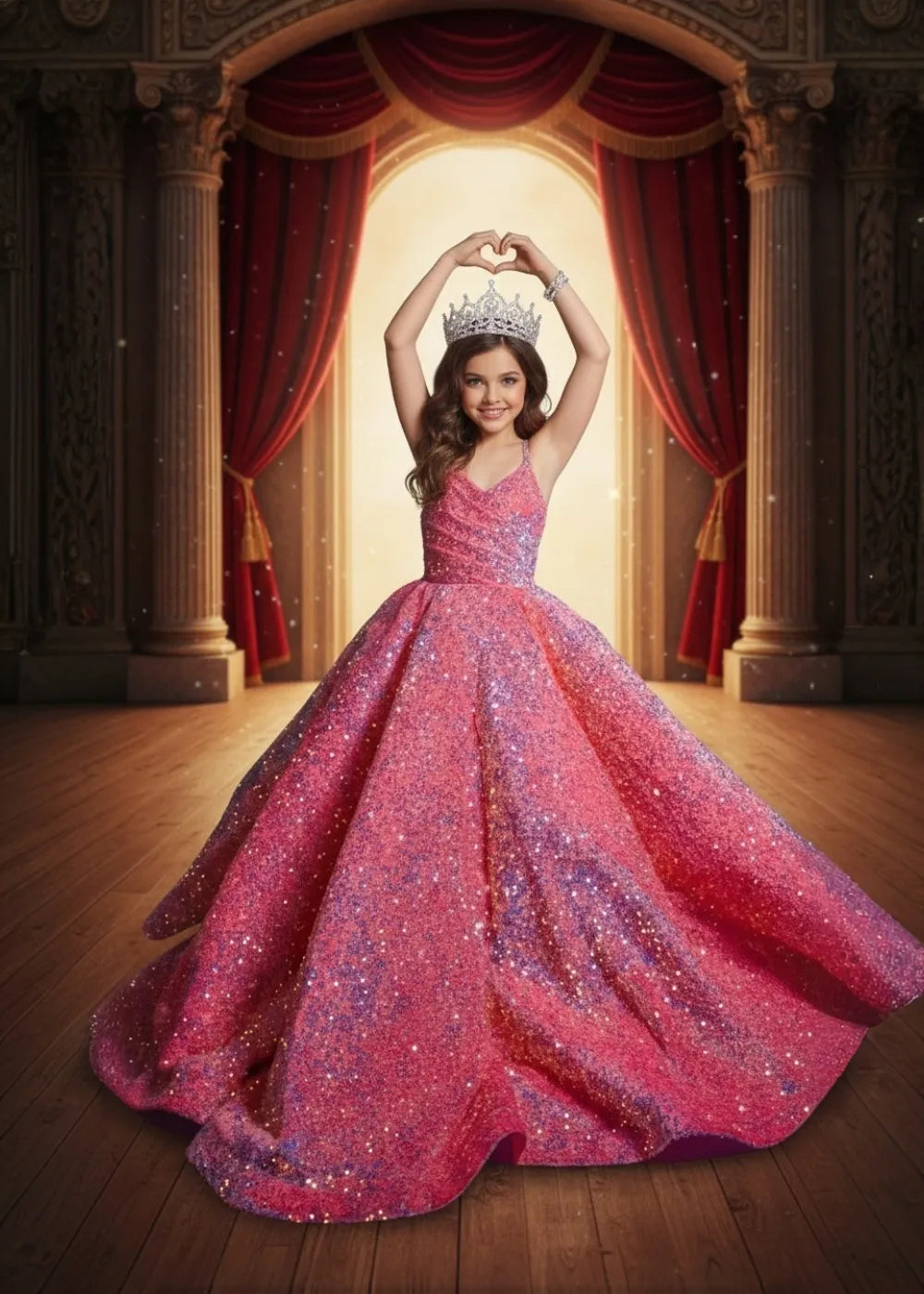
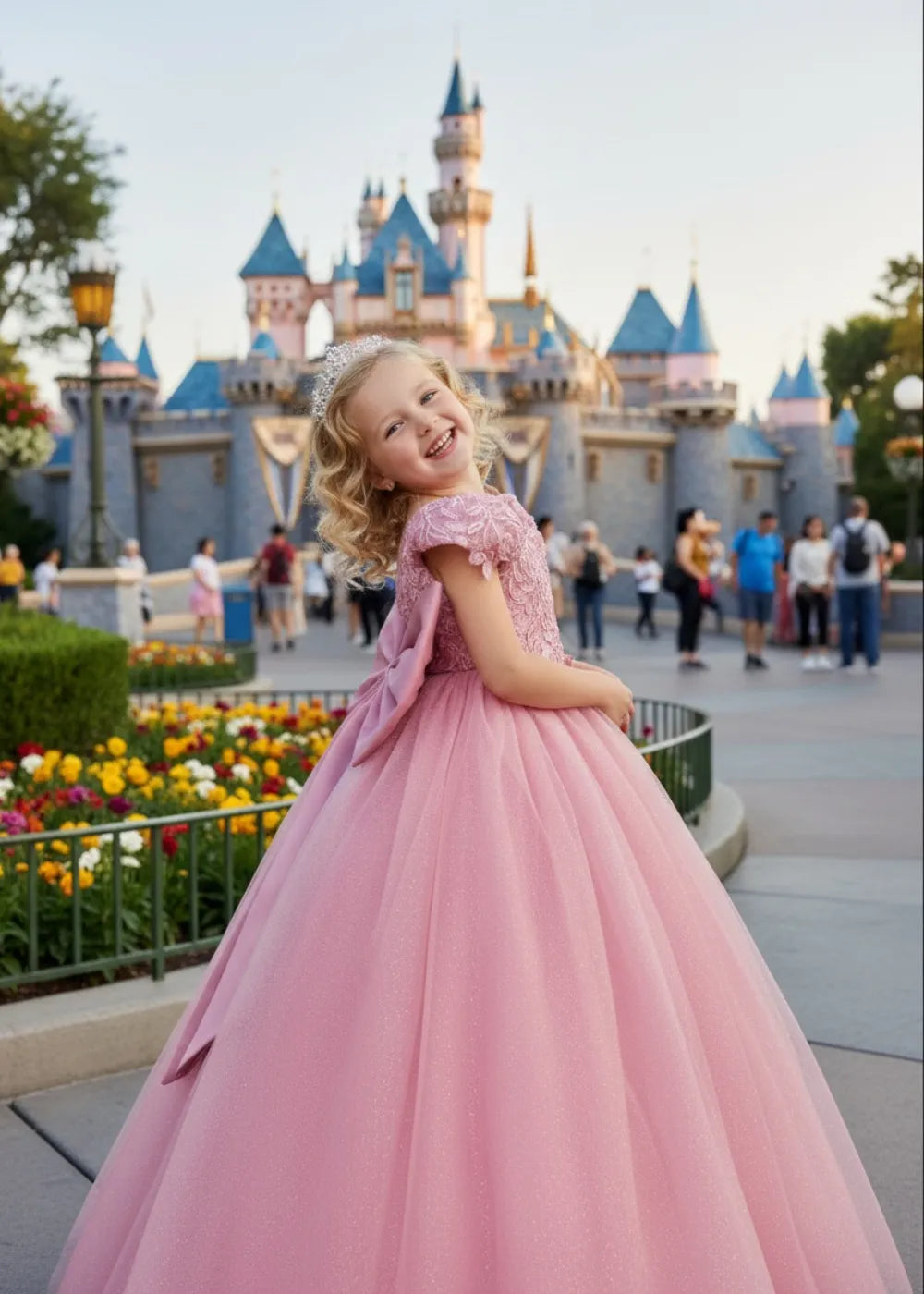
Many Fynony styles are created for weddings, birthdays, holidays, formal dinners, family celebrations, and photo-worthy special moments. Some designs lean soft and classic for flower girl dresses, while others feel fuller, brighter, or more playful for princess-inspired and party occasions.
This behind-the-scenes look takes you inside the Fynony studio, from early sketches to dress forms, fabric planning, detail review, and final occasion styling.
What You'll See Inside the Fynony Studio

A dress does not come together in one step. It is shaped by a series of small choices that help the final style feel balanced, wearable, and right for the occasion.
The goal is simple: a girls' dress should feel beautiful, age-appropriate, and ready for the moment it is designed for.
Step 1: Every Girls' Dress Starts With a Sketch

The first version of a dress often begins on paper.
A sketch helps set the direction before fabric, lace, or trim are added. At this stage, we look at the basic shape first. Will the dress have a soft A-line silhouette? A fuller princess skirt? A fitted-looking bodice with a layered tulle skirt? A simple sleeve? A more dramatic skirt line?
For girls' dresses, sketching is not only about creating a beautiful outline. It is also about proportion. A child's occasion dress should feel special without looking too grown-up. That balance starts early, with the neckline, waistline, sleeve shape, skirt volume, and placement of bows, lace, or floral details.
Some sketches are soft and romantic. Some explore fuller silhouettes inspired by princess dresses for girls. Others begin with lace, embroidery, or a color story. The sketch gives the dress its first personality before the fabric ever touches the table.
A strong sketch does not need to show every final detail. It needs to show the direction clearly enough for the next step.
Step 2: Turning Ideas Into Dress Shapes

Once the idea is clear, the dress needs to move from flat paper into a real shape.
A dress form helps us review proportion in a way a sketch cannot. The bodice, shoulder line, waist, skirt volume, and overall length can all feel different once the design becomes three-dimensional. This is especially important for girls' occasion dresses, because a small change in skirt fullness or waist placement can change the whole feeling of the design.
On the dress form, we can step back, compare the side view, and see whether the bodice, waist, and skirt volume feel balanced together. A dress may look graceful from the front, but the side view may show that the skirt needs a lighter shape or that the bodice needs a cleaner line.
This step is where the idea starts to feel real. The dress begins to show its structure, mood, and movement.
A beautiful style should not only look impressive on a hanger. It should have a shape that feels thoughtful from every angle.
Step 3: Choosing Fabric, Lace and Color Direction

Fabric changes everything.
The same sketch can feel classic, romantic, festive, or fairytale-like depending on the fabric and color direction. Lace can make a bodice feel elegant. Tulle can add softness and movement. Embroidery can create a more detailed, storybook look. A rich color can turn a simple silhouette into something more formal or photo-ready.
When we review fabric and color ideas, we look at the whole mood of the dress rather than choosing color at the end. White, ivory, blush, pastel, red, green, and richer tones each create a different feeling, so color is reviewed alongside fabric, lace texture, and silhouette.
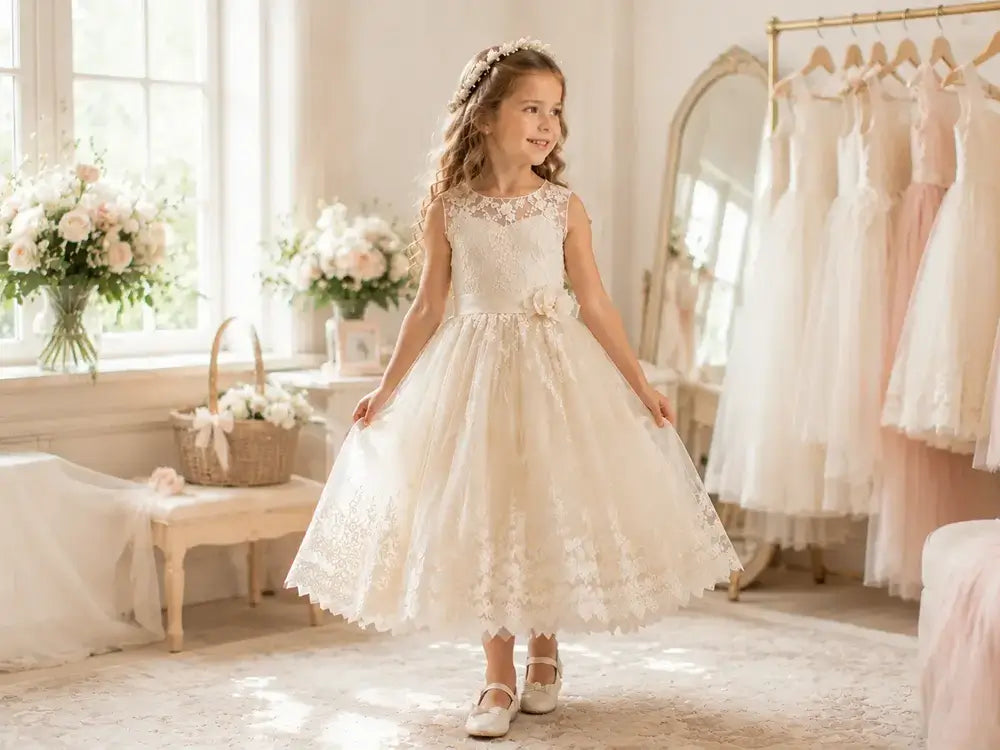
For romantic wedding styles, lace texture and floral appliqué are especially important. They need to look delicate without overwhelming the dress. This is why lace, tulle, and appliqué placement are key parts of creating wearable lace flower girl dresses.
Fabric is never just decoration. It affects the mood, shape, and comfort of the final dress.
For parents comparing different wedding fabrics, our satin flower girl dress guide explains how fabric choice can change the look and feel of a flower girl outfit.
Step 4: Reviewing Lace, Appliqué and 3D Details

Details can make a girls' dress feel magical, but they need to be placed with care.
Lace, appliqué, embroidery, 3D flowers, and trims are reviewed as part of the full dress, not as separate decorations. A beautiful detail should support the design, not compete with it. If the decoration is too heavy, too large, or placed in the wrong area, the dress can start to feel unbalanced.
Shoulder details, neckline edges, waist appliqué, and skirt trims are especially important. These areas affect the overall look of the dress and how the design reads in photos. For younger girls, the result should still feel sweet, polished, and child-appropriate.
This is one of the most important parts of the design process. It is easy to add more detail. It is harder to know when the dress already has enough.
A thoughtful girls' dress should have personality, but the child should still be the focus.
Step 5: Comparing Dresses for Different Occasions

A girls' occasion dress is usually chosen for a specific moment.
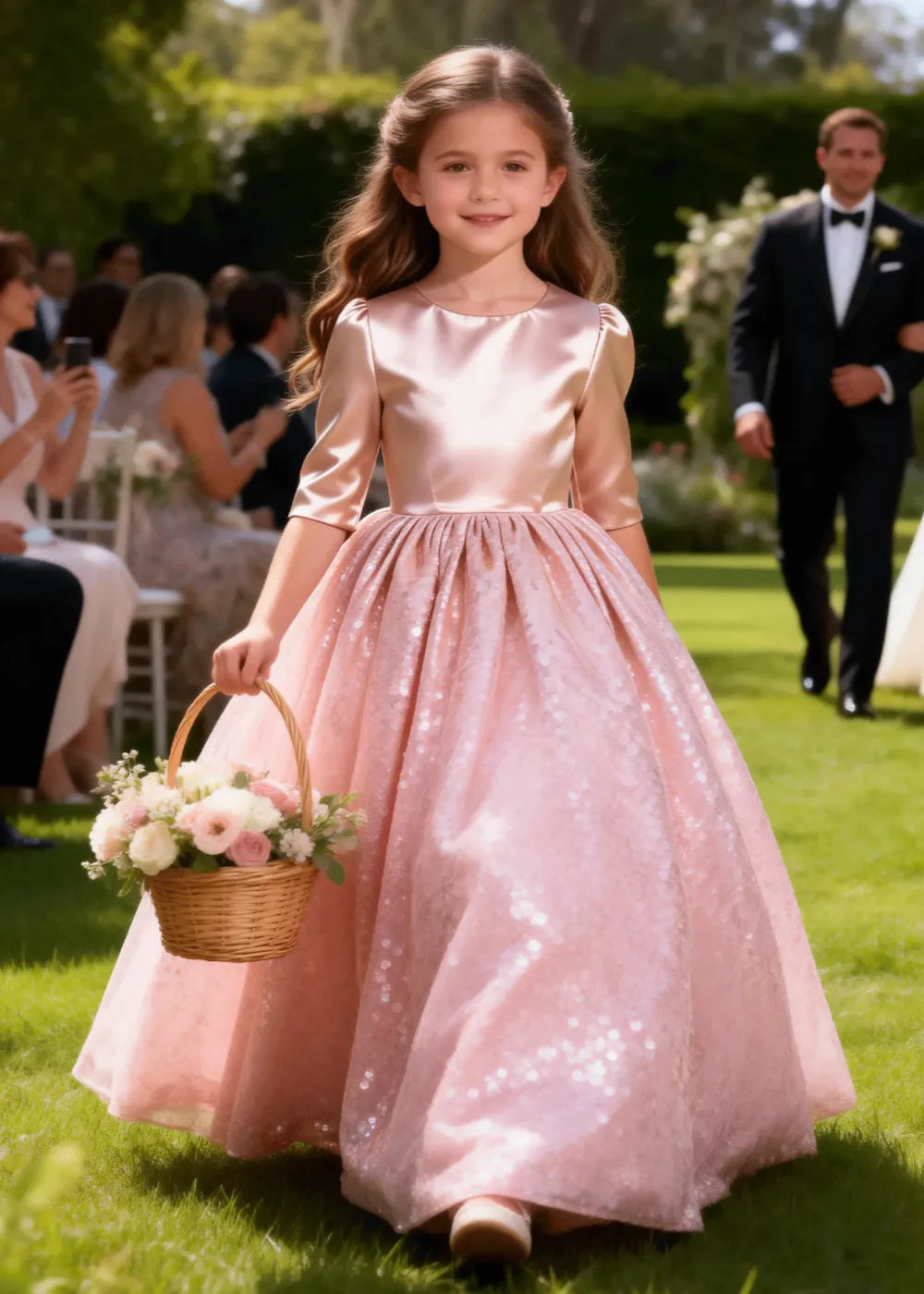
That is why comparing different styles together matters. A wedding dress for a flower girl may need to feel soft, classic, and graceful. A birthday dress can be more playful. A holiday dress may use stronger color or sparkle. A formal family event may call for a more polished silhouette.
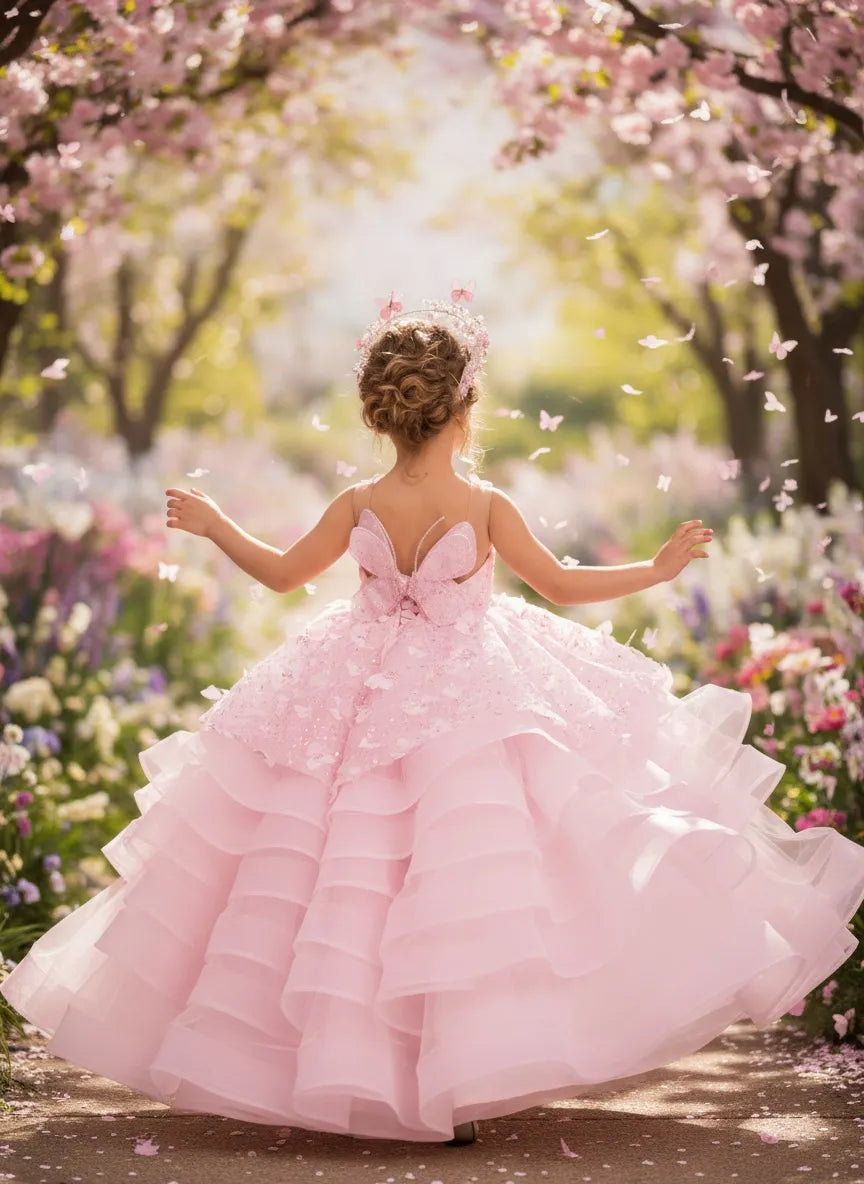
Seeing dresses together helps compare color, volume, detail level, and occasion direction. A white lace dress and a red tulle dress may both be beautiful, but they tell very different stories. A soft pastel gown may suit a garden party, while a fuller embroidered dress may feel more like a fairytale moment.
Bolder colors, richer trims, and playful tulle layers often work beautifully for girls party and holiday dresses, where the dress can feel more festive and expressive.
For outdoor, rustic, or softer wedding moods, our boho flower girl dress guide gives more direction on choosing a relaxed wedding style.
Step 6: Designing for Real Girls, Not Just Photos
A dress needs to look beautiful in photos, but that is not the only goal.
Girls move. They walk down aisles, sit during ceremonies, turn during parties, hold flower baskets, pose for pictures, and spend time with family. A dress that only looks good for one still photo may not be the best choice for a real event.
That is why movement, proportion, and age-appropriate design matter throughout the studio process. A full skirt can feel magical, but it should not make the dress feel too heavy. Lace and appliqué can look special, but they should not make the neckline, shoulder, or bodice feel overdone. Color can be expressive, but it should still match the occasion.
The best girls' occasion dress should help her feel part of the celebration, not trapped inside a costume. It should feel special enough for the moment and natural enough for the child wearing it.
What This Means When You Choose a Fynony Dress

When parents browse a dress online, they usually see the finished photo first. Behind that photo are choices about silhouette, color, fabric, lace, appliqué, and detail placement.
That process matters because it helps each dress feel more complete. A fuller skirt should still look balanced. A lace bodice should still feel sweet and age-appropriate. A bold color should still match the occasion. A detailed dress should still let the child feel like herself.
This is the kind of balance we look for at Fynony.
A dress may begin with a sketch, but it becomes meaningful when it fits the moment: a flower girl walking down the aisle, a birthday girl feeling celebrated, a child dressing up for a holiday photo, or a family choosing something special for a formal event.
Explore Fynony Dresses by Occasion
Every occasion has a different feeling, and the right dress should match that mood.
When you are ready to choose a style, you can explore Fynony by occasion: flower girl dresses for weddings, lace flower girl dresses for romantic details, and princess dresses for girls for fuller fairytale silhouettes.
A flower girl dress may need softness and grace. A birthday dress may need color and joy. A princess-style gown may need volume and drama. A holiday dress may need richness and sparkle. The studio process helps us think through these differences before a dress becomes part of a child's celebration.
Final Thoughts: From Studio Table to Special Occasion
At Fynony, a girls' dress may begin with an idea, but it comes to life through many small choices made around shape, fabric, detail, and occasion.
A sketch sets the direction. Fabric gives the dress its mood. Lace and appliqué add personality. The dress form helps shape the silhouette. Detail checks keep the design balanced. Comparing dresses by occasion helps each style find the right moment.
For parents, choosing a dress is not only about finding something beautiful. It is about choosing a style that fits the child, the event, and the feeling of the day.
Whether you are choosing a flower girl dress, a birthday dress, a holiday outfit, or a princess-style gown, the best girls' occasion dress should feel special, comfortable, and right for the moment.