

Lace flower girl dresses can look timeless in wedding photos, but lace is only the right choice when it feels soft, moves well, and suits the ceremony. A beautiful lace dress that scratches at the neckline, feels stiff at the sleeves, or limits walking can turn into a problem halfway through the wedding day.
The best lace flower girl dresses balance romance with comfort. That means smooth lining, soft seams, secure details, an age-appropriate shape, and a length that lets her sit, walk, smile, carry flowers, and enjoy the celebration.
This guide will help you decide when a lace flower girl dress is the right call, when to choose a softer fabric instead, and how to match lace to the wedding venue, season, and child's age.
What You'll Learn
By the end of this guide, you will know how to judge lace by comfort, lining, length, safety, color, venue, and care. The goal is not only to find a pretty dress, but to choose one a child can actually wear through the ceremony, photos, dinner, and celebration.
Quick Answer
Lace flower girl dresses are a good choice when the wedding style is romantic, classic, garden-inspired, traditional, or formal. Lace works especially well when the dress needs to look soft and special without looking too shiny, too heavy, or costume-like.
The safest lace flower girl dress has a smooth lining, soft lace at the neckline and sleeves, secure appliqué, and a skirt that lets her move easily. For younger girls, knee-length and tea-length styles are often easier than heavy floor-length gowns. For older girls, a more formal lace tulle shape can work if the bodice is still comfortable and age-appropriate.
Lace may not be the best choice if the dress feels rough inside, the sleeves are stiff, the neckline rubs, the skirt is too heavy, or the decorations can be pulled off easily. In those cases, a simpler tulle, chiffon, or satin flower girl dress may be more comfortable for a long wedding day.
The Lace Decision Framework
Start with the wedding first, then test the dress. Lace works best when the venue, season, and dress construction all support the same look. A garden ceremony usually needs softer lace and lighter tulle. A church wedding may need a more classic lace bodice. A ballroom reception can handle more structure, as long as the dress still feels child-appropriate.
The best lace flower girl dresses do not ask a child to trade comfort for photos. They should look special and still feel manageable after the aisle walk is over.
The Lace Comfort Test
A lace dress can photograph beautifully, but the child feels the inside of the dress, not the product photo. Before buying, check every area that touches the skin: neckline, shoulders, sleeves, underarms, waist seam, zipper area, and hem layers.
Ask her to put the dress on, sit down, raise both arms, turn around, walk across the room, and bend slightly as if picking up flower petals. If she immediately pulls at the neckline, scratches her arms, complains about the waist, or walks stiffly, the lace may be too rough or the construction may not be right for the event.
A flower girl dress does not need to feel like pajamas, but it should never feel like something she has to “survive” until photos are over.
Fit Test 1: Soft Lace vs Scratchy Lace

The first lace test is simple: touch the dress before judging the design.
Run your fingers over the inside of the bodice, sleeves, neckline, and underarm area. Soft lace should feel flexible, smooth-backed, or separated from the skin by lining. Scratchy lace often feels stiff, raised, rough, or sharp along the edge.
The American Academy of Dermatology notes that contact dermatitis can appear as an itchy rash, and skin-contact areas such as the neck and underarms are places where irritation may show up. For a long wedding day, those small comfort points matter.
A good lace flower girl dress should look delicate but feel calm against the skin.
Fit Test 2: Lining, Neckline and Sleeve Comfort

Lining is the difference between pretty lace and wearable lace.
For children, lace should not sit directly against large areas of skin unless it is very soft. A lined bodice is usually better than an unlined one. A soft inner layer helps prevent rubbing and makes the dress easier to wear through the ceremony, photos, dinner, and dancing.
Check the neckline first. A high lace neckline can look elegant, but it should not feel tight, scratchy, or stiff when she turns her head. Illusion lace can work beautifully if the inside is smooth and the edges are finished well.
Sleeves need the same test. Long sleeve lace flower girl dresses can be graceful for church, chapel, or traditional weddings, but the sleeve lining and cuff should feel soft. If the sleeve is narrow, stiff, or rough inside, it may become uncomfortable quickly.
The best neckline is not always the most decorative one. It is the one she can wear without pulling, rubbing, or asking to change.
Fit Test 3: Length, Movement and Sitting

Flower girls move more than adults expect.
They walk down the aisle, sit during the ceremony, stand for photos, bend to pick up flowers, climb into cars, hug relatives, and sometimes run straight toward the dessert table. That is why length matters.
For younger girls, knee-length and tea-length lace dresses are often the easiest. They show the dress shape clearly, feel special, and reduce tripping risk. For older girls, an easy midi length can work well if the skirt is not too heavy or stiff.
Very long lace gowns can look dramatic in photos, but they may be harder for young children to manage. If the skirt has lace, tulle, lining, and crinoline layers, test it before the wedding day.
For active younger girls, short dresses for girls or tea-length lace styles are often easier than heavy floor-length gowns.
Watch: How to measure a child before choosing a dress size
Age-based sizing can be a starting point, but measurements give a clearer picture of fit. Before choosing a lace flower girl dress, measure height, chest, waist, and length, then compare them with the dress size chart.
The right length should make the dress feel special without making movement difficult.
Fit Test 4: Secure Details for Younger Girls

Lace flower girl dresses often come with pearls, beads, appliqués, bows, embroidery, 3D flowers, or small decorative trims. These details can look beautiful, but they need to be secure.
For toddlers and very young flower girls, avoid decorations that can be pulled off easily. Loose pearls, glued beads, dangling trims, long ribbons, and fragile appliqué can become a problem during a long event.
The U.S. Consumer Product Safety Commission treats small parts for children under 3 as a serious choking, aspiration, or ingestion concern. That makes secure construction especially important for younger children.
Use the gentle tug test. Lightly touch the appliqué, bow, beads, or flowers. They should feel firmly attached, not loose, peeling, or easy to pick at.
For younger flower girls, simple lace often works better than heavy decoration. A soft lace bodice, tulle skirt, and one well-placed bow can be more practical than a dress covered in fragile trims.
Fit Test 5: Care, Heat and Wedding-Day Practicality

Lace is delicate eventwear. It needs more care than a simple cotton or jersey dress.
Before steaming, washing, or spot cleaning a lace flower girl dress, read the care label. Lace, tulle, appliqué, embroidery, satin lining, and glued details can all react differently to water, heat, and friction. The FTC's Care Labeling Rule makes the label the safest starting point before cleaning or steaming.
Avoid rough rubbing, twisting, high heat, and last-minute washing unless the label says it is safe. For small marks, careful spot cleaning is often better than washing the whole dress.
Also think about the wedding venue. Lace and tulle should be kept away from open flames, candles, sparklers, fire pits, and outdoor heaters. The CPSC's Flammable Fabrics Act is a useful reminder to treat delicate event dresses carefully around heat.
Watch: Gentle care tips for lace fabrics
Lace should be treated as delicate eventwear. This video gives a simple visual reminder to handle lace gently, but the care label on the dress should always be the first instruction you follow.
A lace dress is not difficult to manage, but it should be treated like formalwear, not everyday playwear.
Color Guide: White, Ivory, Champagne, Blush and Pastel Lace

Color changes the mood of lace more than most parents expect.
A girls white lace dress can look classic, clean, and traditional, especially for church, chapel, or formal ceremonies. The key is to make sure it does not compete with the bride's dress. Many families choose white or ivory for flower girls because it photographs softly and matches bridal styling, but the dress should still look child-appropriate.
Ivory lace is often warmer than bright white. It works well for traditional weddings, vintage themes, rustic venues, and softer bridal palettes.
Champagne lace feels dressier and slightly more formal. It is a good choice when the wedding colors are warm, neutral, gold, beige, or classic.
Blush lace feels romantic and gentle. It works beautifully for spring weddings, garden ceremonies, and soft floral color palettes.
Pastel lace, such as light pink, lavender, soft blue, or pale green, can work for outdoor weddings or child-focused celebrations when the wedding party does not need a strict white or ivory look.
The best color is the one that supports the wedding palette without making the flower girl look too mature, too bridal, or too costume-like.
Wedding Scenario Guide
Lace changes depending on the venue. The same lace flower girl dress may feel perfect in a ballroom but too formal in a garden. Before choosing, match the fabric weight, length, color, and decoration to the wedding setting.
Scenario 1: Garden, Outdoor or Spring Wedding

Lace is a natural fit for garden weddings because it feels romantic without needing heavy sparkle. For spring or outdoor ceremonies, choose soft lace, floral appliqué, light tulle, and a dress that moves easily.
Avoid heavy lace gowns if the venue has grass, gravel, steps, or uneven paths. A tea-length or knee-length dress is often easier for walking and photos.
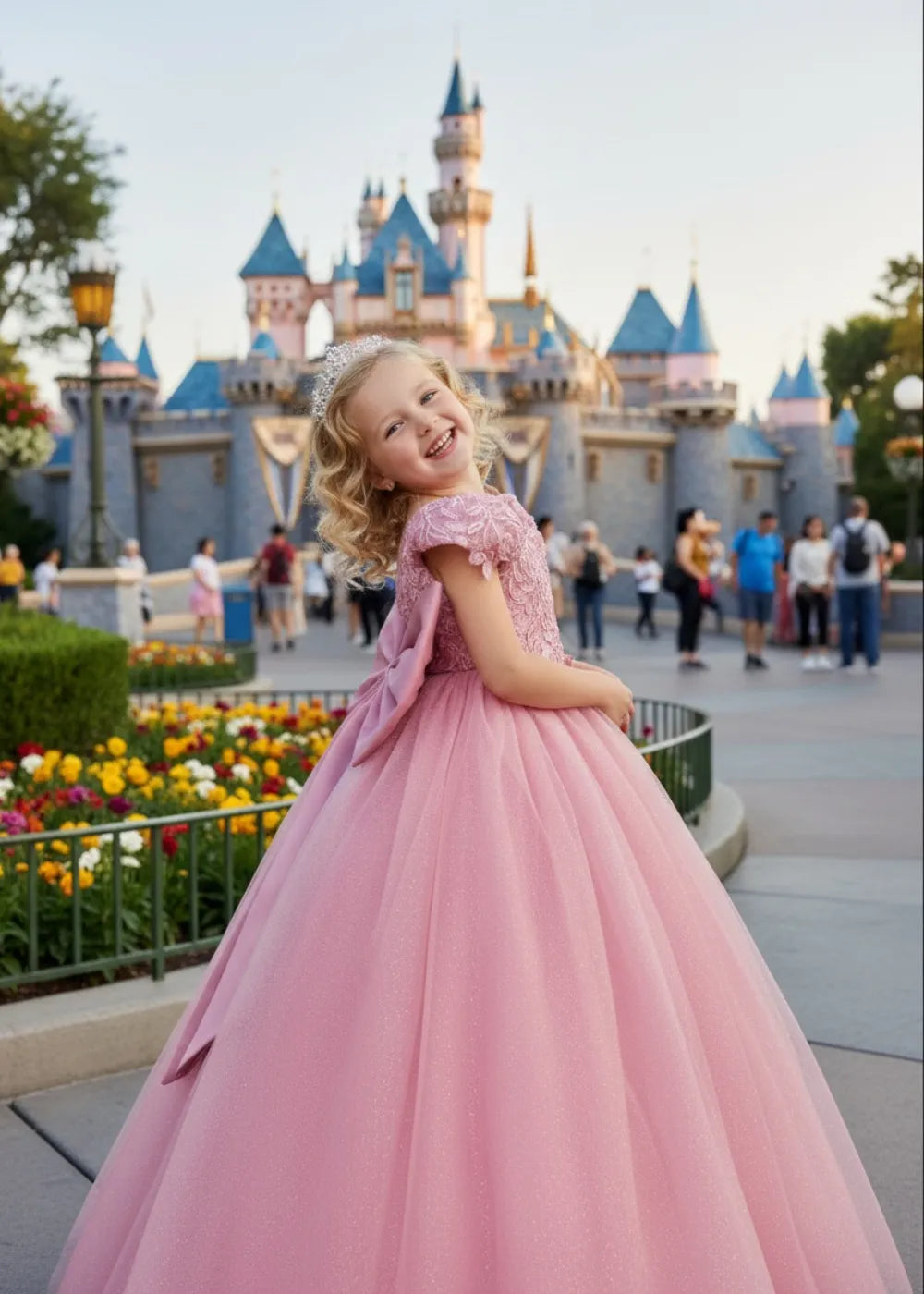
For a garden or spring ceremony, a lace bodice flower girl dress keeps the look romantic without making the whole dress feel heavy.
If the wedding leans relaxed, outdoor, or nature-inspired, our boho flower girl dress guide can also help you decide whether lace should feel soft and romantic or more free-flowing and casual.
Scenario 2: Church, Chapel or Traditional Wedding

For a church, chapel, or traditional wedding, lace can look graceful and respectful. White, ivory, and champagne are the most common choices. Long sleeves, illusion necklines, and classic lace bodices can work well when they are soft and properly lined.
The comfort test is especially important here because the child may need to sit quietly for part of the ceremony. A scratchy neckline or tight sleeve will feel more noticeable when she is sitting still.
For a church, chapel, or traditional ceremony, a long sleeve lace flower girl dress can feel graceful when the sleeve edges, neckline, and bodice lining are soft enough for sitting through the ceremony.
Scenario 3: Rustic, Boho or Vineyard Wedding

Rustic and vineyard weddings usually need lace that feels softer and less formal. Instead of a structured lace ball gown, look for airy layers, soft floral lace, light tulle, flutter sleeves, or a relaxed A-line shape.
Ivory, blush, champagne, beige, and soft floral tones work especially well in these venues. The dress should blend with natural textures such as wood, greenery, linen, florals, and outdoor light.
For this setting, lace should not look overly bridal or ballroom-heavy. It should feel sweet, comfortable, and connected to the venue.
Scenario 4: Formal Dinner or Ballroom Wedding

A formal dinner, hotel wedding, or ballroom reception can handle a more structured lace flower girl dress. This is where lace tulle gowns, embroidered bodices, and fuller skirts can work beautifully.
The key is balance. A dress can be formal without looking adult. Choose a modest neckline, age-appropriate bodice, secure waist, and skirt volume that still lets her move.
For a ballroom wedding or dressier reception, a lace tulle princess flower girl ball gown can give lace a more formal, photo-ready shape.
For very dressy events, princess dresses for girls can also offer a special-occasion shape when lace alone feels too delicate or too simple.
Common Mistakes With Lace Flower Girl Dresses
Lace mistakes usually happen when the dress is chosen for the photo instead of the full wedding day. A lace flower girl dress should look beautiful, but it also needs to work for movement, sitting, age, weather, venue, and care.
Mistake 1: Choosing lace from the photo only
Lace can look soft online even when the inside feels stiff. Always check the neckline, sleeve opening, underarms, waist seam, and lining before deciding.
Mistake 2: Ignoring the lining
Unlined lace can scratch, especially around the bodice and sleeves. For children, lining is not a luxury detail. It is what makes lace wearable.
Mistake 3: Picking too much decoration for a toddler
Pearls, beads, bows, flowers, and appliqué should be secure and age-appropriate. For toddlers, fewer details are often better.
Mistake 4: Choosing a dress that is too long
A floor-length lace gown may look dramatic, but younger girls often move better in knee-length or tea-length styles. The dress should not make walking, sitting, or turning difficult.
Mistake 5: Making the dress too formal for the venue
A ballroom lace gown may feel wrong at a relaxed garden wedding. A simple lace dress may feel too casual for a formal hotel reception. Match the lace to the venue.
Mistake 6: Forgetting care until the last minute
Do not wash, steam, or iron lace without checking the care label. Delicate fabrics can change shape, snag, shrink, or lose detail when treated roughly.
Mistake 7: Forcing lace when another fabric would work better
Lace is not the only wedding-ready option. If lace feels too scratchy, stiff, or fragile for the child, a softer fabric direction such as a satin flower girl dress may work better.
The Quick Decision Checklist
Choose a lace flower girl dress if it feels soft inside, has a smooth lining, lets her walk and sit easily, and matches the wedding setting. Skip or reconsider lace if the neckline rubs, sleeves feel stiff, decorations are loose, or the hem is too hard to manage.
The best lace flower girl dresses are not just beautiful. They are soft, lined, secure, and easy enough for a child to wear through the ceremony, photos, dinner, and celebration.
Browse more flower girl dresses if you want to compare lace, satin, tulle, floral, and simple wedding-ready styles.