

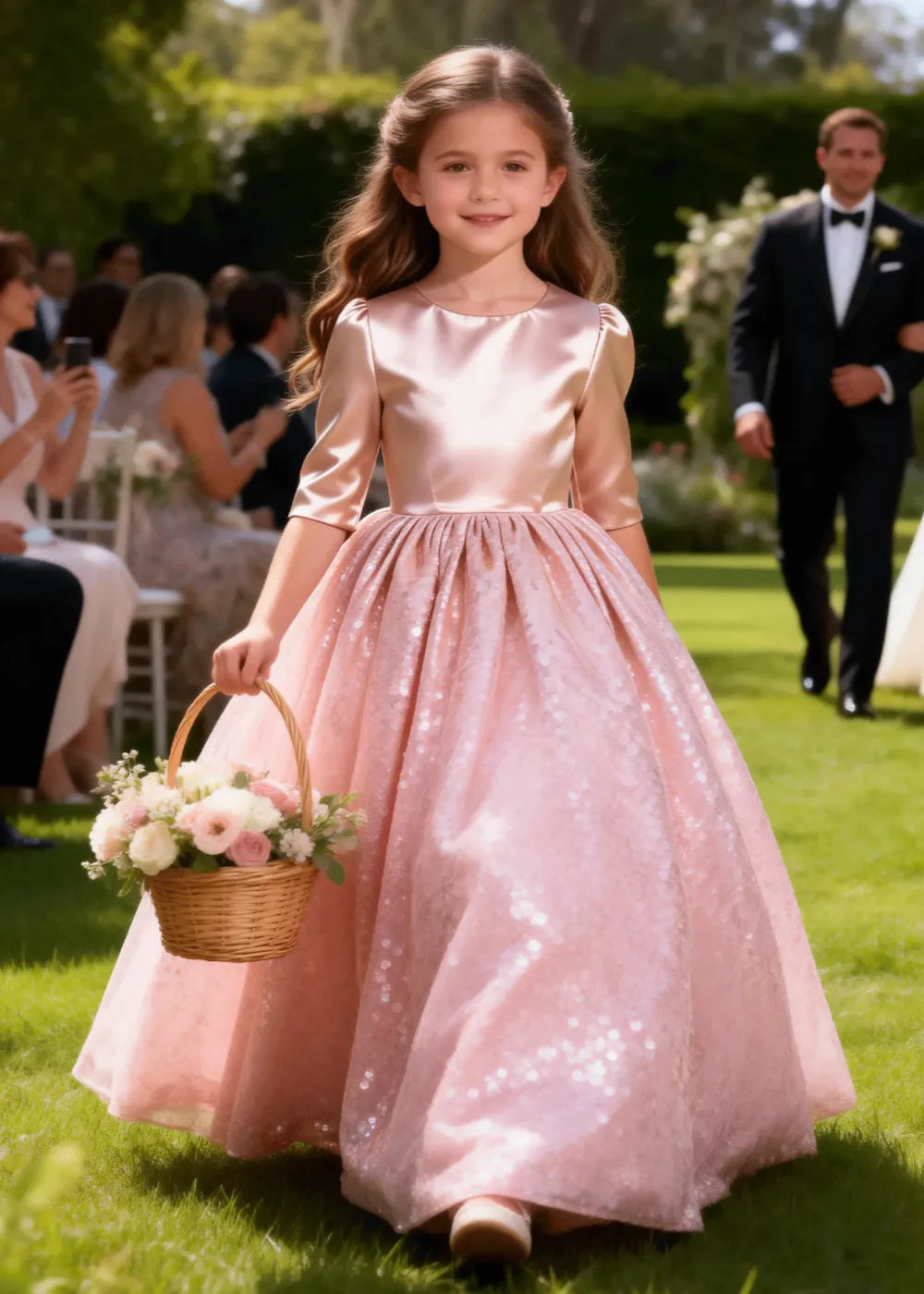




Choosing dresses for a confirmation is different from choosing a regular party dress.
A confirmation ceremony is usually formal, family-centered, and often connected to a church, parish, or school. The dress should look polished in photos, but it also needs to feel respectful, age-appropriate, and comfortable enough for the whole ceremony.
That is where many families hesitate.
Is white required?
Can a teen wear navy or blush?
Are sleeveless dresses acceptable?
How short is too short?
What feels formal without looking too bridal or too mature?
The safest answer is simple: choose a dress that would feel appropriate for a church service, family ceremony, and formal photos at the same time.
This guide explains how to choose confirmation dresses for girls and teens by dress code, neckline, sleeves, length, color, fabric, age, and ceremony setting.
What You'll Learn
Here is the short version of what you can decide by the end.
Quick Answer
The best dresses for a confirmation are modest, polished, age-appropriate, and comfortable enough for the ceremony.
For most families, confirmation dresses for girls should have a neat neckline, appropriate length, soft lining, and a formal fabric such as satin, lace, chiffon, soft tulle, or crepe. White, ivory, champagne, blush, soft blue, lavender, sage, navy, and muted pastels are usually safe color directions.
Very short hems, low necklines, tight cocktail shapes, heavy sparkle, sheer fabrics, and overly casual materials are usually less appropriate.
The Confirmation Dress Code: What "Appropriate" Usually Means

A confirmation dress code is not always the same everywhere.
Some churches, parishes, schools, or dioceses give clear guidance. Others only give a general expectation, such as modest, formal, or church-appropriate. If a written dress code is provided, follow that first.
When there is no specific rule, use the setting as the guide. A confirmation ceremony is not usually the place for an adult cocktail dress, a casual sundress, a club-style party dress, or a heavily embellished gown.
A good confirmation dress usually feels:
- modest without looking plain
- formal without looking bridal
- age-appropriate without looking childish
- polished enough for photos
- comfortable enough for sitting, standing, walking, and family celebration
For church ceremony dresses for girls, the most important areas to check are neckline, shoulders, length, fabric, transparency, sparkle level, and overall maturity of the silhouette.
When in doubt, choose a dress that would feel appropriate for a church service, family ceremony, and formal photos at the same time.
For a quick church-context answer to what to wear for Confirmation, this short video gives a useful starting point before you choose the final dress.
Fit Test 1: Neckline, Sleeves, and Coverage
The first fit test is coverage.
A confirmation dress does not need to be overly conservative, but it should feel respectful for the ceremony setting. A slightly higher neckline, covered shoulder, soft sleeve, or simple cardigan can make a dress feel more appropriate without making it look old-fashioned.
Jewel necklines, bateau necklines, soft square necklines, and modest V-necks are usually safer choices. Deep V-necks, very low scoop necklines, backless styles, and very thin straps can feel too exposed for some church or school ceremonies.
Sleeves are not always required, but they often make the outfit easier. Short sleeves, cap sleeves, lace sleeves, chiffon sleeves, and long sleeves all work well. If the dress is sleeveless, a cardigan, bolero, or light shawl can help make the look more ceremony-ready.
A style such as the grace long sleeve chiffon gown shows why long sleeves can be useful for confirmation: the coverage is already built into the dress, so the outfit feels church-ready without needing an extra layer.

Verdict: If the neckline, shoulder, and back all feel appropriate for a church photo, the dress is usually on the right track.
Fit Test 2: Length and Movement

Length matters because confirmation is a ceremony, not only a photo moment.
The dress should allow her to sit, stand, walk, kneel if needed, and move through the day without pulling at the skirt. Very short dresses can feel too casual or party-like, especially in a church setting.
Knee-length, tea-length, and modest midi dresses are usually the safest choices. Floor-length dresses can work for older girls or more formal celebrations, but they should not feel bridal, costume-like, or difficult to walk in.
For younger girls, tea-length formal dresses for girls often works better than floor-length gowns. They feel formal, photograph well, and reduce the risk of tripping. For teens, midi and clean A-line shapes can feel more refined without becoming too mature.
Verdict: Choose a length that feels formal when standing and comfortable when sitting.
Fit Test 3: Color and Fabric

Color and fabric should support the ceremony, not overpower it.
Confirmation dresses can be white, but they do not have to be white unless the church or school requires it. Ivory, champagne, blush, soft blue, lavender, sage, navy, and muted pastels can also work well.
White, Ivory, and Champagne
White, ivory, and champagne are classic for confirmation because they feel clean, formal, and photo-friendly.
White can work beautifully, especially for traditional church ceremonies. The key is styling. Keep the dress simple enough that it does not feel overly bridal. A simple lace dress, satin A-line dress, or tea-length white dress can feel appropriate without looking like a miniature wedding gown.
Ivory and champagne are softer alternatives. They can look warmer in indoor lighting and may be easier to style for family photos.
Blush, Soft Blue, Lavender, and Sage
Soft colors work well for younger girls, spring ceremonies, family photos, and families who want something gentle but not plain.
Blush, soft blue, lavender, and sage can feel formal when the fabric and silhouette are polished. These colors are especially good when white feels too bridal or too expected.
The color should stay muted rather than loud. Bright neon shades or overly bold party colors can distract from the ceremony setting.
Navy and Muted Tones
Navy, dusty blue, muted mauve, and deeper soft tones can work well for teens and older girls.
These colors feel more mature without looking adult. They also photograph cleanly and can be easier to wear again for other formal occasions.
For a teenage girl, navy or a muted tone can be a good alternative to white, especially when paired with a modest neckline and simple silhouette.
Lace, Satin, Chiffon, and Soft Tulle
Fabric changes the mood of a confirmation dress.
Satin looks polished and formal. Lace feels respectful and soft. A chiffon dress for girls can work well when the ceremony needs something light, modest, and polished. Soft tulle can work well for younger girls when the skirt is gentle rather than oversized.
Avoid fabrics that look too casual, too sheer, too shiny, or too party-heavy. The goal is clean formalwear, not a birthday dress or cocktail look.
Verdict: Choose a color and fabric that feel clean in church, soft in family photos, and appropriate for her age.
Confirmation Dresses by Age
Age changes the best dress choice.
A younger girl may look right in soft tulle, lace, or a gentle A-line shape. A teenager usually needs cleaner lines, less princess volume, and more refined fabric.
Confirmation Dresses for Girls
Confirmation dresses for girls should feel sweet, formal, and comfortable.
A-line dresses, soft tulle dresses, lace dresses, short sleeve dresses, tea-length dresses, and gentle colors usually work well. The dress can be cute, but it should still feel ceremony-appropriate.
Look for soft lining, comfortable waist, easy movement, and details that do not scratch. Bows, lace, short sleeves, soft sparkle, and gentle skirt volume can work when they are not overdone.
For younger girls, the best dress is often the one that feels special without making the day harder.
Confirmation Dresses for Teenage Girls
For older girls, confirmation dresses for teenage girls should feel polished, modest, and age-appropriate.
This is where cleaner silhouettes usually work better than oversized princess shapes. Satin, lace, chiffon, crepe, midi lengths, tea-length dresses, simple A-line shapes, and modest necklines are all strong options.
Avoid tight bodycon styles, adult cocktail silhouettes, low necklines, very short hems, and heavy party sparkle. A teen confirmation dress can be elegant without looking mature in the wrong way.
The best confirmation dress for a teenager usually looks refined, not flashy.
Confirmation Dresses for 14-Year-Olds
Confirmation dresses for 14-year-olds should sit between childlike and mature.
A 14-year-old may not want a very young-looking dress, but she also does not need an adult party style. Soft formal designs work best: A-line dresses, lace details, satin finishes, chiffon skirts, modest sleeves, and clean colors.
White, ivory, blush, soft blue, champagne, navy, and sage can all work. The dress should feel respectful for the ceremony and comfortable enough for photos and family celebration afterward.
Confirmation Dresses for 16-Year-Olds
Confirmation dresses for 16-year-olds can be more refined.
This age usually works well with cleaner lines, less skirt volume, polished fabrics, and more subtle details. Satin, chiffon, lace, crepe, midi-length, and simple A-line silhouettes are good directions.
The main caution is maturity. A 16-year-old can wear a more elegant confirmation dress, but it should still avoid adult cocktail cues such as very tight fits, low necklines, high slits, or heavy evening sparkle.
Verdict: The older the girl, the cleaner the dress should usually become.
Scenario 1: A Catholic Confirmation Ceremony
A Catholic confirmation ceremony usually calls for a respectful, modest, and polished outfit.
The safest dress is not the flashiest one. It should feel appropriate for a church setting, family ceremony, and formal photos.
If your family is preparing for a Catholic confirmation, this video gives a simple overview of the ceremony before you choose the final outfit.
Verdict: For Catholic confirmation, choose respectful and polished over trendy or flashy.
Scenario 2: A School or Parish Confirmation Event
A school or parish confirmation may include a ceremony, group photos, sitting for a long time, and a family celebration afterward.
The dress should be formal enough for the ceremony and comfortable enough for the whole day.
Verdict: Choose a dress that can handle the ceremony, photos, and family gathering without feeling fussy.
Scenario 3: Confirmation Photos and Family Celebration
After the ceremony, families often take photos or gather for lunch or dinner.
The dress should still look clean in photos without becoming too decorative. One polished feature is enough: lace, satin sheen, soft color, sleeve detail, or a clean silhouette.
For photos and family celebrations, formal dresses for girls work best when the dress has one polished feature instead of too many competing details.
Verdict: Choose one polished feature and let the ceremony setting stay the focus.
Common Mistakes With Dresses for a Confirmation
Most confirmation dress mistakes come from treating the ceremony like a party, wedding, or casual school event.
A confirmation dress should sit in the middle: formal, respectful, age-appropriate, and comfortable.
Mistake 1: Ignoring the Dress Code
Different churches and schools may have different expectations.
Some may require white. Some may prefer covered shoulders. Some may discourage short dresses or bold sparkle. Always check the invitation, school note, parish guidance, or ceremony instructions first.
Mistake 2: Choosing a Dress That Feels Too Adult
A confirmation dress can be elegant without looking like an adult cocktail dress.
Avoid tight silhouettes, low necklines, high slits, sheer panels, and very short hems. A simple A-line, lace, satin, chiffon, or modest fit-and-flare dress usually feels more appropriate.
Mistake 3: Choosing Style Over Comfort
The dress may need to last through the ceremony, photos, family greetings, lunch, or dinner.
If the waist is tight, the fabric is itchy, or the skirt is hard to move in, the dress may look good but fail the day. Comfort is part of the dress code because the child still has to wear it.
Mistake 4: Overdoing White or Sparkle
White can be appropriate for confirmation, but it should not look overly bridal.
Sparkle can also work in small amounts, but heavy sequins may feel too party-focused. Lace, satin sheen, soft tulle, sleeve detail, or a simple bow usually feels more ceremony-appropriate than full glitter.
The Quick Decision Checklist
Before choosing dresses for a confirmation, check the ceremony first.
- If the church or school gives a confirmation dress code, follow that first.
- If there is no clear rule, choose modest, polished, and age-appropriate.
- If she is younger, choose soft lining, easy movement, and comfortable length.
- If she is a teen, choose clean lines and avoid adult cocktail styles.
- If choosing white or ivory, keep the styling simple so it does not feel overly bridal.
- If the dress has lace, tulle, or sparkle, check comfort and lining.
- If the ceremony includes photos, choose a color and fabric that look clean under indoor light.
- If unsure, choose a dress that works for church, family photos, and dinner at the same time.
The best confirmation dress is not the most dramatic one. It is the dress that feels respectful for the ceremony, comfortable for the child, and polished in family photos.
Explore more confirmation dresses for girls and formal dresses for church ceremonies, family photos, and special occasions.


