
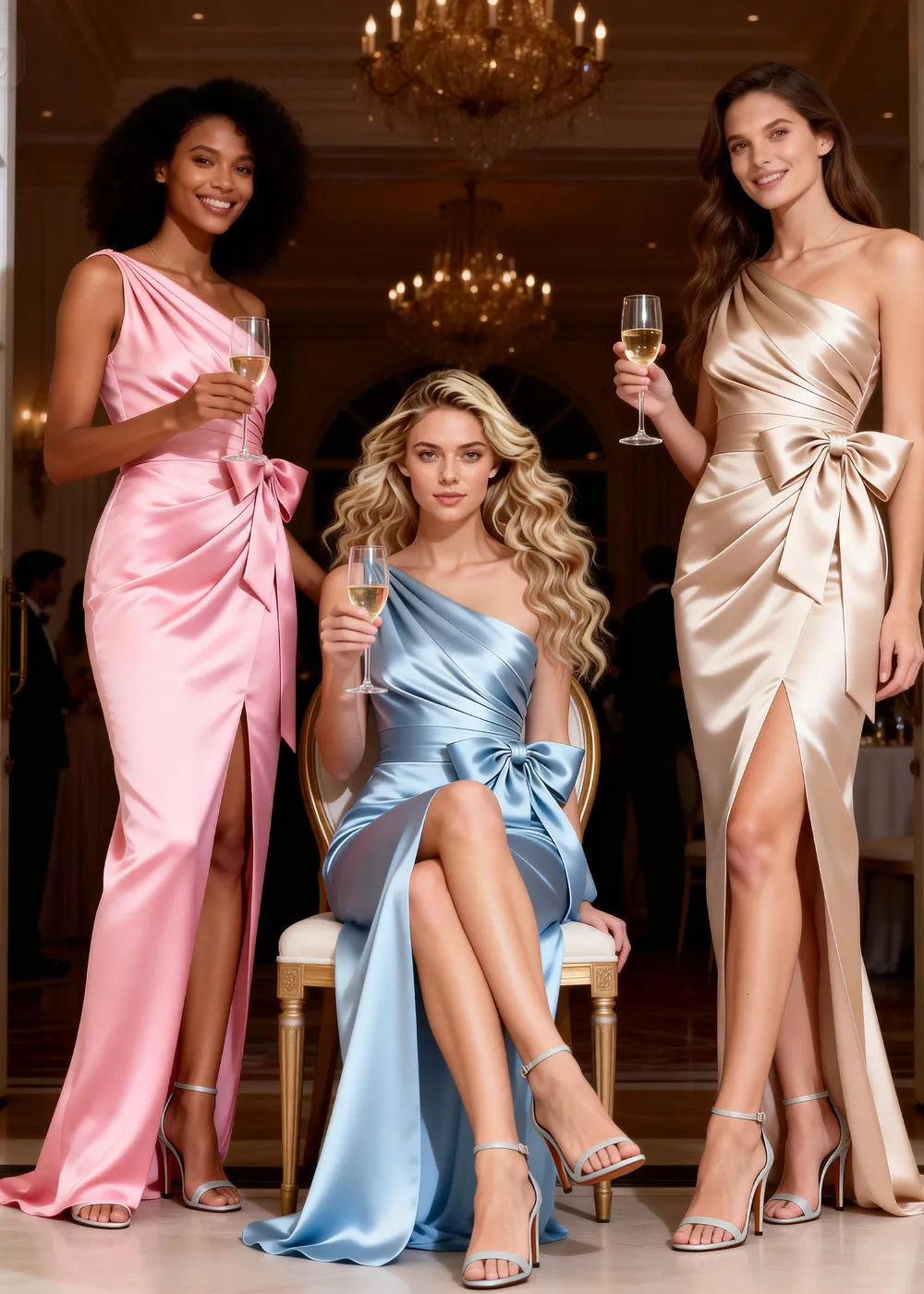
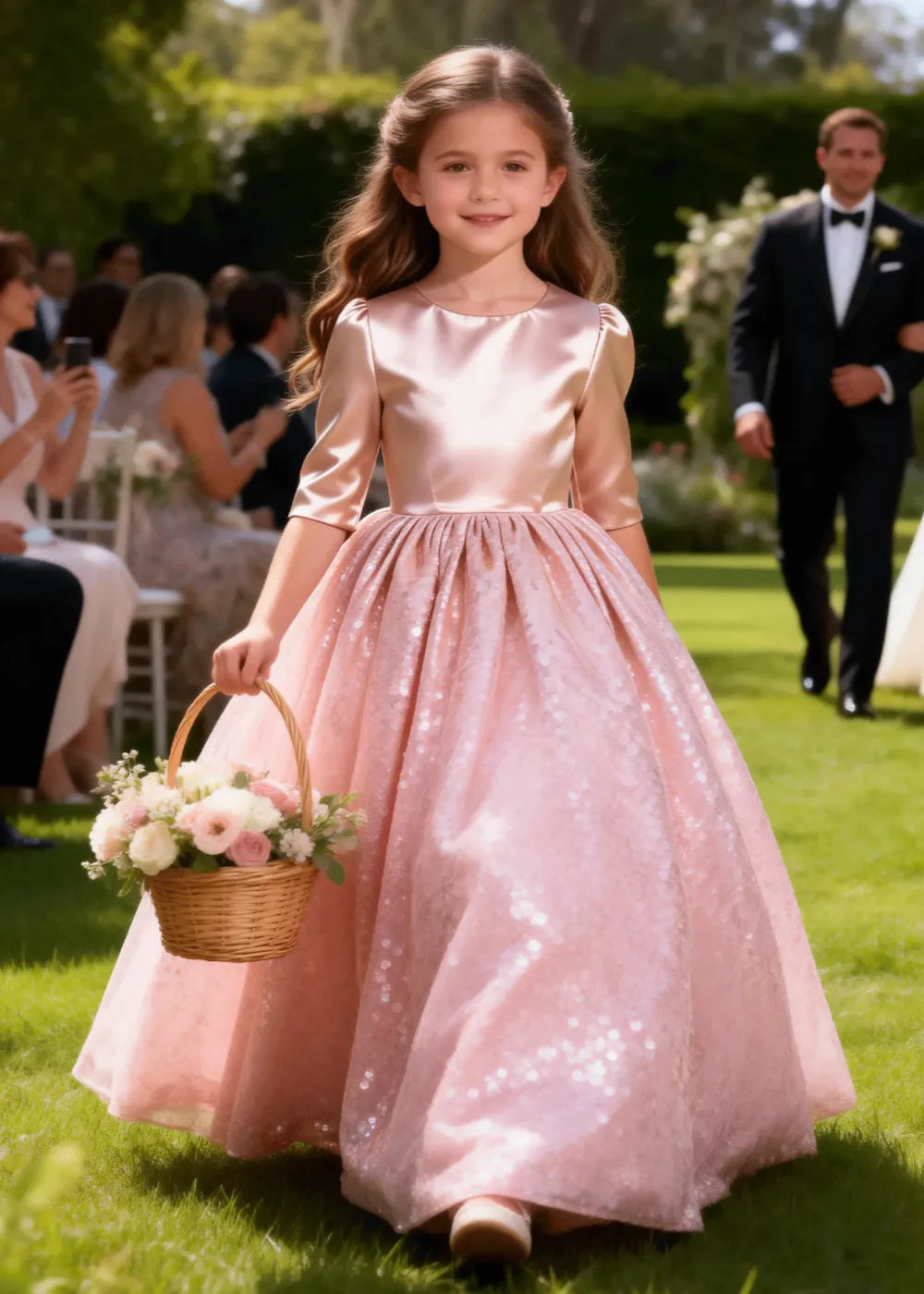
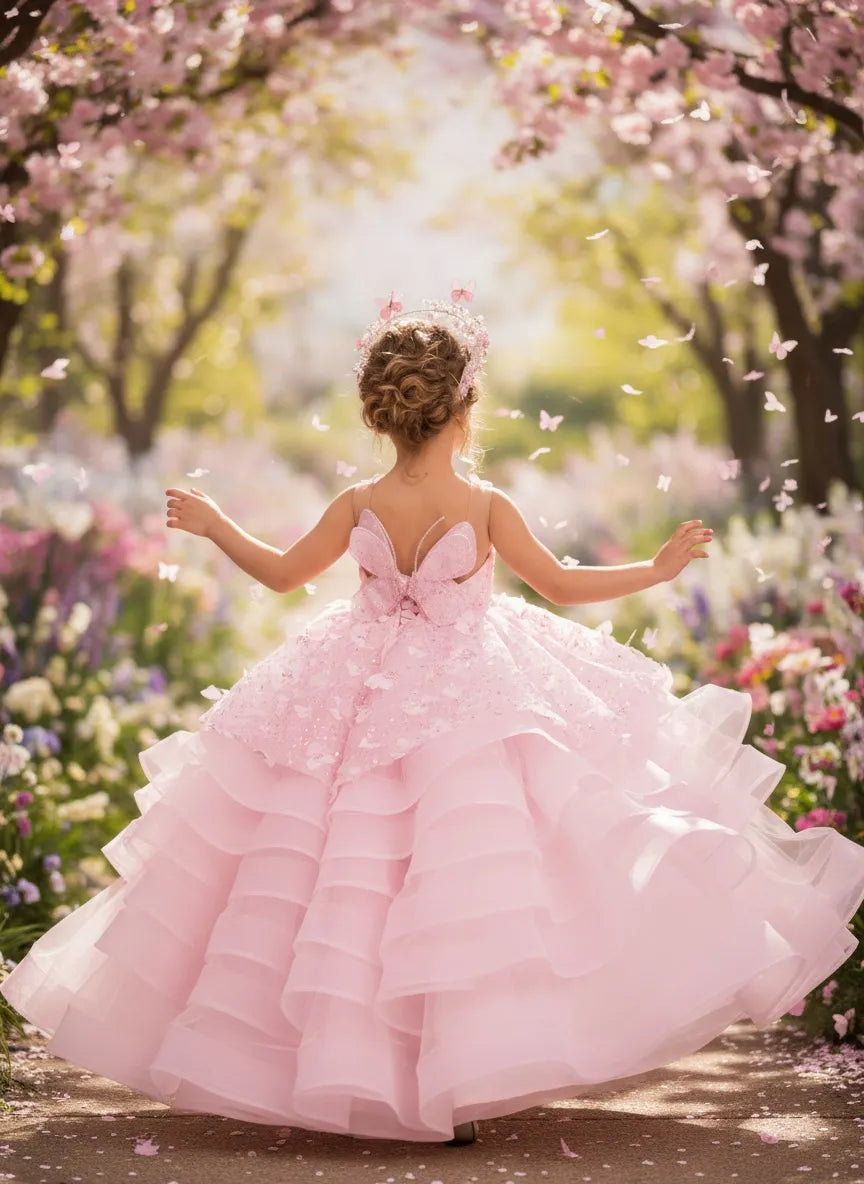
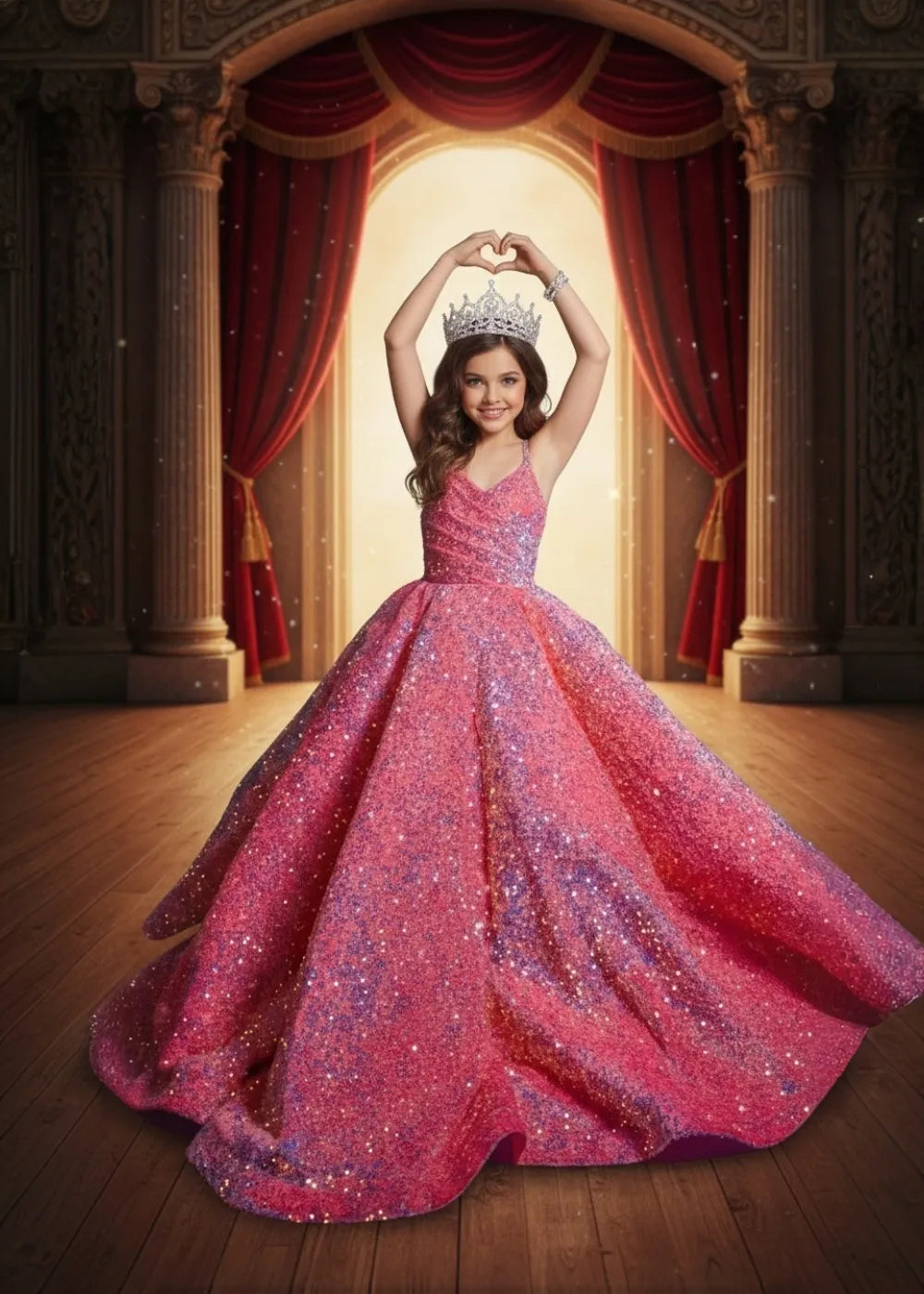
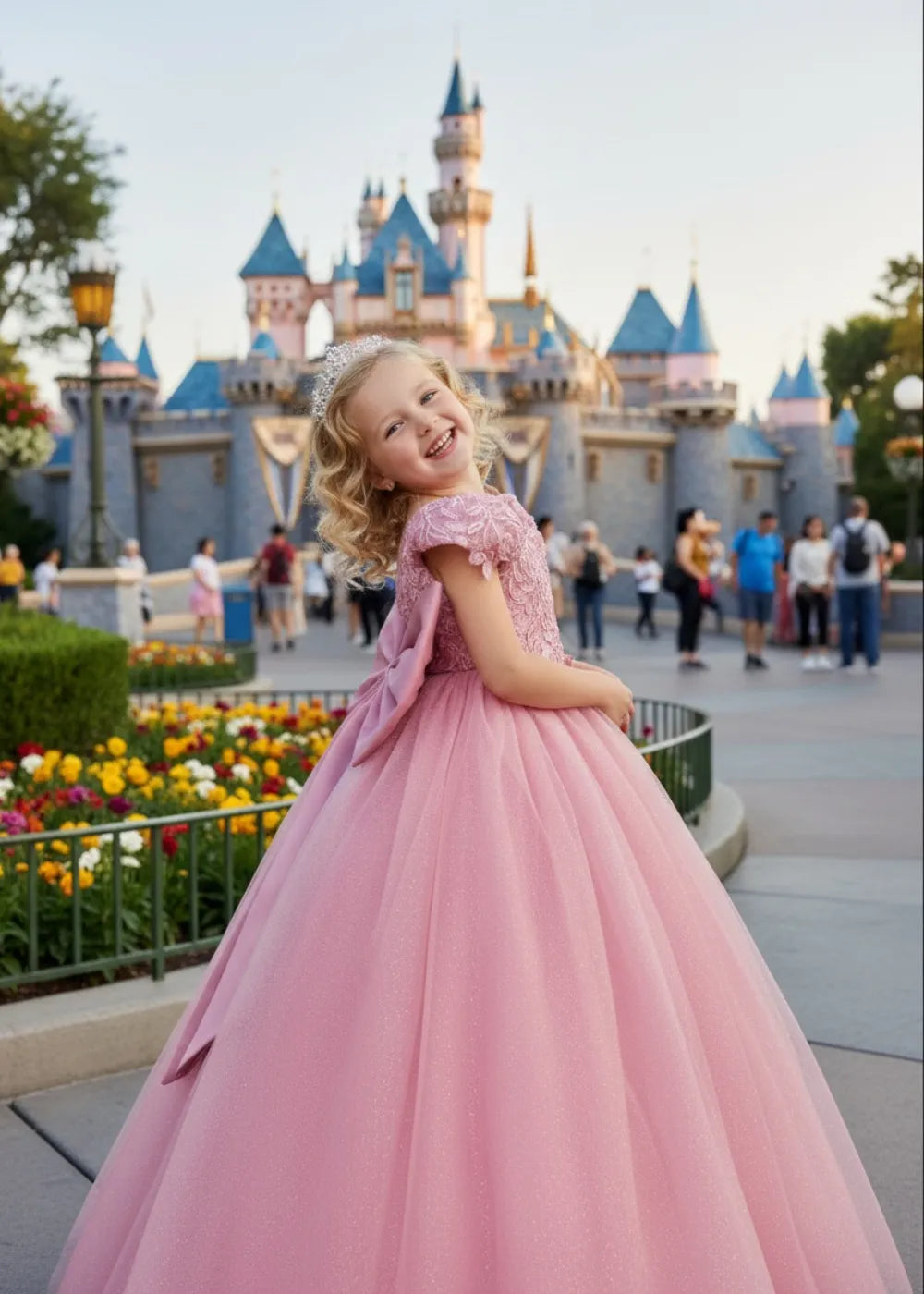

A junior bridesmaid can be one of the hardest members of the wedding party to dress well.
She may already feel too old for a traditional flower girl look, but many adult bridesmaid gowns simply are not cut with a tween or young teen in mind. The bride wants the bridal party to look cohesive. Parents are thinking about coverage, sizing and whether the dress will still fit by the wedding. And by the tween years, the girl wearing it usually has opinions of her own.
That makes choosing junior bridesmaid dresses less about finding a smaller adult gown and more about getting four things right: coordination, fit, comfort and confidence.
The simplest rule is to coordinate rather than copy. Keep one or two elements from the adult bridesmaids—usually the color, fabric or level of formality—then adapt the neckline, silhouette and length to the younger wearer.
A good junior bridesmaid dress should look intentional beside the rest of the bridal party without making the girl feel either younger or older than she is.
What You'll Learn
Quick Answer: What Should a Junior Bridesmaid Wear?
A junior bridesmaid should wear a dress that fits the wedding's level of formality and color palette while still feeling comfortable and appropriate for her age.
A-line silhouettes are a dependable starting point because they create shape without fitting too closely through the hips. Chiffon is useful when movement and lighter construction matter, while satin can suit a formal indoor or evening wedding. Hem length can range from knee or tea length to floor length depending on the venue.
She does not need to wear the exact adult bridesmaid gown. Keeping the same color or fabric while adjusting the neckline, fit or coverage is often enough to make the bridal party look coordinated.
What Is a Junior Bridesmaid?
A junior bridesmaid is a younger member of the bridal party who falls somewhere between a traditional flower girl and an adult bridesmaid.
There is no universal birthday that defines the role. The Knot's guide to junior bridesmaids generally places junior attendants in the tween-to-young-teen range, but maturity, comfort and the role the couple wants the girl to play matter more than a strict cutoff.
That flexibility is useful. A confident nine-year-old may be comfortable standing with older attendants, while another child of the same age may prefer the simpler responsibilities of a flower girl.
The role should fit the person rather than the number on her birthday cake.
Junior Bridesmaid vs. Flower Girl

Flower girls are usually younger, and their dresses can leave more room for playful details such as bows, fuller tulle skirts and princess-inspired silhouettes.
Junior bridesmaid styling usually moves closer to the adult bridal party. Cleaner lines, softer A-line shapes and colors that relate to the bridesmaids tend to feel more natural.
Vogue's overview of the flower girl role also treats age as a guideline rather than a hard rule and notes that preteen attendants may fit more naturally into a junior role.
That difference matters to the girl wearing the dress, too. An older tween may reject a perfectly wearable dress simply because it looks like something intended for a much younger child.
If you are still deciding which direction suits a younger attendant, Fynony®'s guide to choosing a flower girl dress looks more closely at age, comfort and wedding setting. You can also compare the fuller silhouettes in the flower girl dress collection with more streamlined junior styles.
Junior Bridesmaid vs. Adult Bridesmaid
A junior bridesmaid can look fully connected to the adults without wearing an identical gown.
Suppose the adult bridesmaids are in dusty blue chiffon with fitted bodices and lower necklines. The junior attendant can stay in dusty blue chiffon but switch to an A-line skirt, a more secure neckline and a simpler bodice.
The photographs will still read as one bridal party.
Adult cuts do not always scale down well. A neckline that sits naturally on an adult may fall very differently on a twelve-year-old frame. Shoulder width, torso length and bodice shaping can all change how the same design looks and feels.
Keep the visual connection. Adjust the construction.
The Junior Bridesmaid Dress Decision Framework
Before comparing dozens of dresses, settle four questions.
1. Start With the Girl
Ask what she is actually comfortable wearing.
Does she like sleeves? Does she want to look more like the older bridesmaids? Does she dislike full skirts or anything that feels too princess-like? Is she comfortable managing a floor-length hem?
By the tween years, her opinion should count.
That does not mean handing her an entire collection and asking her to decide alone. A more practical approach is for the bride and parent to narrow the choice to two or three approved styles, then let the girl choose among them.
She gets a say. The wedding still gets a coherent look.
2. Decide What Actually Needs to Match
Matching the bridal party does not mean repeating every detail. In most weddings, one or two shared elements are enough to make the junior bridesmaid look connected to the group:
- color
- fabric
- dress length
- overall formality
- accessories
The rest can change to suit the younger wearer. A fitted adult silhouette can become a softer A-line; a low neckline can be raised while the color and fabric stay the same.
3. Look at the Venue and Season
The setting often tells you more about fabric and hem length than the inspiration board does.
A church with a long ceremony raises different questions from a garden venue with gravel paths and lawn photographs. A July outdoor wedding makes fabric weight more important. A November ballroom gives you more freedom to choose structured satin and floor-length hems.
Think about how the dress will actually be worn, not just where it will be photographed.
4. Measure Before You Browse by Size
Age is not a size chart.
Take the measurements requested for the individual dress before deciding which size to order. Bust, waist, hips, height and hollow-to-floor measurements may all matter depending on the construction.
Once those four questions are settled, color, fabric and length become much easier to narrow down.
Dress Differently at 9, 12 and 15
Age should guide the conversation, not dictate the dress.
Ages 8–10: Keep Some Youthfulness
At the younger end of the junior bridesmaid range, softer and less body-conscious shapes often feel most natural.
A-line skirts, flutter sleeves, higher necklines, chiffon and tea or ankle lengths are useful starting points.
The main issue at this age is often practicality rather than trend.
A younger attendant may need to cross grass, climb venue stairs, sit through a long ceremony and manage bathroom breaks without help from the rest of the bridal party. A dramatic train or rigid fitted bodice may look impressive for photographs and become annoying within an hour.
The dress should still feel special. It just should not demand constant management.
Ages 11–13: The Tween Sweet Spot

This is often the most difficult age range because both body proportions and personal preferences can change quickly.
A twelve-year-old may strongly resist anything that feels childish, while her parent may be equally uncomfortable with a gown that looks too adult.
That is why searches for junior bridesmaid dresses for 12 year olds should not be treated as an age-to-size shortcut. Two girls who are both twelve may need different sizes, different necklines and completely different silhouettes.
A clean A-line shape is often a useful middle ground. It gives the dress structure without fitting closely through the hips and usually leaves enough room for sitting and movement.
Fynony®'s A-line dresses for girls include several variations on this shape.
The more useful question at this age is not, "What do twelve-year-olds wear?" It is, "What makes this particular girl feel polished without feeling dressed up as someone older?"
Ages 14–16: Closer to the Adult Bridal Party
Older junior bridesmaids may prefer a more streamlined silhouette that relates more closely to the adult attendants.
Floor-length chiffon, satin, clean A-line shapes and restrained asymmetrical necklines can all work. The dress can look more sophisticated without becoming body-conscious or overly revealing.
But even here, age alone does not decide what works.
A fourteen-year-old may be perfectly comfortable in a one-shoulder neckline and uncomfortable in a fitted skirt. Another may feel the opposite. Ceremony setting, body proportions and personal preference should still lead the decision.
Get the Length Right Before You Fall in Love With the Dress

Hem length changes how the dress functions through the day.
Knee-Length Dresses
Knee-length dresses are easy to move in and work especially well for daytime, summer and less formal weddings.
They also reduce the risk of stepping on the hem, which can make them practical for younger attendants.
Tea and Midi Lengths
Tea and midi lengths sit in a useful middle ground.
They look more polished than a short party dress but are easier to manage than a full-length gown. They can work especially well for garden weddings, semi-formal ceremonies and younger tweens.
Ankle-Length Dresses
Ankle length gives much of the visual effect of a long dress while keeping the hem off the floor.
For grass, gravel or uneven paths, that can be a real advantage.
Floor-Length Dresses
Floor-length junior bridesmaid dresses fit naturally into formal, church, ballroom and evening weddings.
The mistake is checking the hem only while she is standing still.
Have her put on the planned wedding shoes, walk normally, turn and climb a step. If the wedding includes outdoor photographs, remember that a hem that clears a ballroom floor may still catch on grass.
In practice, the best length test is movement, not the hanger.
Satin or Chiffon? Start With the Wedding Setting

The fabric choice becomes easier when you stop asking which one is "better" and ask what the wedding day actually demands.
When Satin Makes Sense
Satin creates a cleaner, more structured appearance and works especially well for formal indoor ceremonies, evening receptions and cooler seasons.
Its smoother surface can also photograph beautifully because it catches light more clearly than a matte fabric.
The tradeoff is structure.
Depending on the lining and construction, satin can feel warmer and less fluid than chiffon. Creases may also show more clearly after travel or prolonged sitting.
If that finish suits the wedding, Fynony®'s Satin Junior Bridesmaid Dress is one example of a floor-length A-line style with a defined waist and satin-like finish.
You can also compare other satin dresses for girls.
Satin makes the most sense when polish and structure matter more than maximum movement. For a hot outdoor ceremony, chiffon may be easier to wear.
Why Chiffon Is Easy to Wear
Chiffon creates a softer drape and works well when movement matters.
It is particularly useful for spring and summer weddings, garden ceremonies, destination events and receptions where the junior bridesmaid will be moving between indoor and outdoor spaces.
The outer layer is not the whole story, though.
A lightweight chiffon shell may sit over several layers of lining. Check the finished construction instead of assuming that "chiffon" automatically means light.
Fynony®'s chiffon dresses for girls show how the same fabric can be used in both relaxed and more formal silhouettes.
If ease of movement and softer drape are the priorities, chiffon is often the simpler choice.
When Floral Works Better Than a Solid Color
Floral junior bridesmaid dresses can solve a coordination problem when the wedding palette includes several related colors rather than one exact shade.
Imagine sage adult bridesmaids, ivory flower girls and blush flowers. A print that picks up all three tones can visually connect the group without putting everyone in the same color.
That works especially well for garden and spring weddings.
The scale of the print matters. Smaller or softer florals are easier to integrate into a bridal party than large, high-contrast prints that become the focus of every photograph.
Lace and Tulle: Use Texture Carefully
Lace suits romantic, traditional and church settings, but softness in a photograph does not always mean softness against the skin.
Check the armholes, neckline, lining and any exposed seams. Lace that feels slightly rough during a quick fitting may become much more noticeable after several hours.
Fynony®'s guide to choosing a lace dress for a wedding goes deeper into lining, softness and fit.
Tulle adds volume and can preserve some of the visual softness associated with flower girl styling. That can work for younger junior attendants, but several layers also add warmth and bulk.
More volume is not automatically more comfortable.
Sleeves Are About More Than Modesty

Junior bridesmaid dresses with sleeves are often considered for church ceremonies, cooler seasons or girls who simply prefer more coverage.
But a sleeve should never be judged on its own.
A long-sleeved dress with a very low back may provide less overall coverage than a sleeveless dress with a higher neckline and fuller skirt.
Movement matters too.
During the fitting, ask her to lift both arms, reach forward and give someone a hug. Sleeves that feel fine while her arms are resting at her sides may pull across the shoulders once she moves.
Fynony®'s Grace Long Sleeve Bridesmaid Dress shows how more coverage can still be paired with a fluid A-line chiffon silhouette.
The useful question is not simply "Does it have sleeves?" It is "Can she move comfortably in the whole dress?"
Choose a Color That Works With the Bridal Party
A junior bridesmaid does not need an exact color match.
She can wear the same shade, a lighter version of the bridesmaid color, the same fabric in a related tone or a coordinating neutral.
Before deciding, look at the adult dresses, flowers, venue and season together. Fynony®'s wedding dress color guide explores seasonal palettes in more detail.
Soft Wedding Colors: Sage, Dusty Blue and Pink

Sage green junior bridesmaid dresses work naturally in garden, spring and rustic weddings because the shade sits easily beside ivory, champagne, blush and botanical arrangements.
Dusty blue is just as flexible for a junior attendant, especially when the adult bridal party includes navy, grey, silver or other soft neutrals. It usually creates a softer, less formal look than deeper blues, while navy and richer blue tones usually suit evening, fall and winter weddings more naturally.
Pink needs a little more precision because the category covers everything from pale blush to dusty rose. Instead of asking whether "pink" works, compare the actual shade with the adult bridesmaid dresses and flowers.
A lighter blush can soften a dusty-rose bridal party, while a brighter pink may draw more attention than intended. If the wedding already uses several muted tones, keeping the junior bridesmaid within that same color family usually creates a more cohesive result.
The practical question is simple: does the shade sit naturally beside the rest of the wedding?
Formal and Neutral Colors: Black, White, Ivory and Champagne
Black junior bridesmaid dresses can work very well for formal, evening, winter and black-tie weddings.
The cut matters more than the color itself.
On a younger attendant, chiffon, flutter sleeves or an A-line skirt can keep black from feeling too severe. Fynony®'s Square Neck Flutter Sleeve Chiffon Dress offers black alongside white and ivory, making it easy to see how the same softer silhouette changes with the palette.
White junior bridesmaid dresses can also work if the bride is comfortable with the choice. Ivory gives a warmer, softer result, while champagne moves farther from bridal white and can feel slightly more formal.
Gold works best when metallic or warm-neutral accents already appear elsewhere in the wedding.
Should Junior Bridesmaids Match the Adult Bridesmaids?
They can, but they do not need to wear the exact same dress.
Brides' junior bridesmaid guide recommends looking at the wedding palette, sizing and the younger attendant's comfort rather than treating an identical gown as a requirement.
In practice, the easiest approach is to decide which one or two elements should stay consistent.
Same Color or Fabric, Different Construction
This is often the most practical choice.
If the adult bridesmaids are wearing fitted dusty blue chiffon gowns, the junior bridesmaid can stay in the same color and fabric while switching to an A-line skirt, a more secure neckline or greater coverage through the bodice.
The group still looks cohesive, while the junior dress fits the younger wearer more naturally.
The same idea works with bridesmaid dresses in satin, chiffon or other coordinated fabrics: keep the element that visually ties the group together, then adjust the construction where needed.
When an Exact Match Works
An identical dress can work if the style is available in an appropriate size and already suits the junior bridesmaid's proportions, comfort level and ceremony setting.
But there is no need to force an exact match simply for symmetry.
If the adult gown includes a low neckline, high slit, very open back or heavily fitted bodice, keeping the color while choosing a different junior silhouette will usually create a more natural result.
Exact matching should be an option, not the default rule.
A related shade can also work well. Dusty blue adult bridesmaids with a softer blue junior dress, for example, can still photograph as one intentional bridal party.
For a younger junior bridesmaid, the dress may even act as a visual bridge between the bridesmaids and flower girl—perhaps using the adult bridesmaids' color with a softer skirt or more youthful detail.
The goal is simple: she should look connected to the bridal party, not identical to it.
Fit Matters More Than the Age on the Label
One of the easiest mistakes in girls' formalwear is treating age as a size.
Body proportions vary significantly through the tween and early-teen years, and dress construction varies too.
Measure the Body She Has Now
Use the measurements requested for the individual dress.
Common measurements include:
- bust
- waist
- hips
- height
- hollow to floor
Measure over the undergarments she is likely to wear with the dress and keep the tape close to the body without pulling it tight.
For a floor-length gown, include the intended shoe height whenever possible.
A 12-Year-Old Is Not Automatically a Size 12
The number attached to her age is not a reliable shortcut to dress size.
Two twelve-year-olds may have different shoulder widths, torso lengths, waist measurements and heights. Puberty also happens at different times, so the same labeled size may sit very differently on two girls of the same age.
Use the product's actual measurements first. Treat age only as context.
What If She Is Between Sizes?
Do not automatically size up.
First ask where the dress is most fitted.
For a structured bodice, upper-body measurements may matter most. For a design with a defined waist, the waist measurement may be the limiting point.
Then consider alterations.
Taking in a slightly loose waist may be straightforward. Correcting shoulders or a neckline that are several inches too large can be more difficult.
Leave Room for Growth, Not for Guesswork
Ordering early is sensible. Buying a dress two sizes too large because she "might grow into it" is not always.
An oversized dress can create its own problems:
- straps slipping
- neckline gaping
- waist falling too low
- hem becoming a tripping hazard
If the wedding is still several months away, order from current measurements with sensible ease and plan another fitting closer to the date.
Room to grow should not mean room to swim.
A Five-Minute Fitting Should Tell You More Than the Mirror
Standing still is not a wedding-day test.
Once the dress is on, ask her to:
- sit
- walk quickly
- turn
- raise both arms
- reach forward
- climb a step
- walk in the wedding shoes
Then watch what she adjusts without being prompted.
Does she keep pulling a strap back into place? Is she lifting the skirt every few steps? Does the waistband dig in when she sits? Does the lining itch around the armhole? Do the sleeves pull across the shoulders?
Those reactions matter.
If she keeps fixing the dress during a five-minute fitting, she is unlikely to enjoy wearing it for a six-hour wedding day.
Four Common Junior Bridesmaid Scenarios
General rules become much easier to use once the wedding day is specific.
Scenario 1: A 10-Year-Old at a Spring Garden Wedding

The adult bridesmaids are wearing sage chiffon. The ceremony begins at 4 p.m., followed by family photographs on the lawn. The junior bridesmaid is ten and will be carrying a small bouquet from the stone path across the grass.
There is little reason to copy a fitted adult gown exactly.
A softer sage A-line dress in chiffon with flutter sleeves and an ankle or manageable floor-length hem would keep the palette cohesive while giving her more freedom to move.
Sage is not the difficult part of this decision. The walking surface is.
For garden and relaxed outdoor celebrations, Fynony®'s boho wedding dress guide also looks at how venue and movement affect the final choice.
Scenario 2: A 12-Year-Old Matching Dusty Blue Bridesmaids

The bride wants dusty blue. The adult bridesmaids are wearing chiffon. The parent wants a little more coverage, while the twelve-year-old does not want to look like a flower girl.
This is exactly where coordination works better than duplication.
Keep the dusty blue and the chiffon. Change the shape.
A square neckline, flutter sleeves and an A-line skirt can preserve the visual connection without copying a fitted adult gown.
Fynony®'s Elegant Square Neck Chiffon Maxi Dress is one example of that approach.
What matters here is the formula: same palette, younger construction.
Scenario 3: A 14-Year-Old at a Formal Evening Wedding
The adult bridesmaids are wearing black floor-length gowns. The reception is in a ballroom and the dress code is formal.
Black is not the problem.
An overly adult cut may be.
A fourteen-year-old can coordinate naturally in black, but a cleaner neckline, flowing A-line skirt and chiffon or satin construction may feel more appropriate than a gown with a dramatic slit or heavily fitted bodice.
In this situation, the color stays. The cut changes.
Scenario 4: A Church Wedding Where the Family Wants More Coverage
The wedding takes place in a church in autumn. The ceremony is long and the family prefers sleeves.
Long sleeves are a sensible starting point, but they are not the whole answer.
Check the neckline, back, lining and shoulder mobility. Have the girl sit for several minutes and lift both arms. A sleeve that pulls across the shoulder will become more noticeable as the day goes on.
A lighter chiffon construction such as the Grace Long Sleeve Bridesmaid Dress can provide coverage without relying on a heavy structured bodice.
Common Shopping Mistakes
The first mistake—shopping by age—is easy to make because it feels simple. In practice, it can lead to a dress that fits nowhere particularly well.
Buying too large "for growth" can be just as frustrating. A dress that is two sizes too big may leave the shoulders slipping and the waist sitting near the hips long before the girl has a chance to grow into it.
Another mistake is choosing the dress entirely from a standing photograph. A dramatic hem may look beautiful for five posed minutes and become irritating once she starts walking between the ceremony, dinner and reception.
And by the tween years, excluding the girl completely can create its own problem. A controlled choice usually works better than no choice—or unlimited choice.
The 6-Question Junior Bridesmaid Checklist
Before ordering, ask:
If those six answers work, the dress is probably ready for the shortlist.
Once the color, fabric and level of formality are clear, comparing options becomes much easier. You can narrow Fynony®'s junior bridesmaid collection by the details that actually fit the wedding and the girl wearing the dress.
Final Takeaway
A junior bridesmaid does not need to look like a large flower girl or a miniature adult bridesmaid.
She needs to look like herself—just clearly connected to the rest of the wedding party.
If the dress fits her current measurements, moves comfortably, works with the bridal-party palette and stops demanding her attention once the ceremony begins, the styling is probably right.


