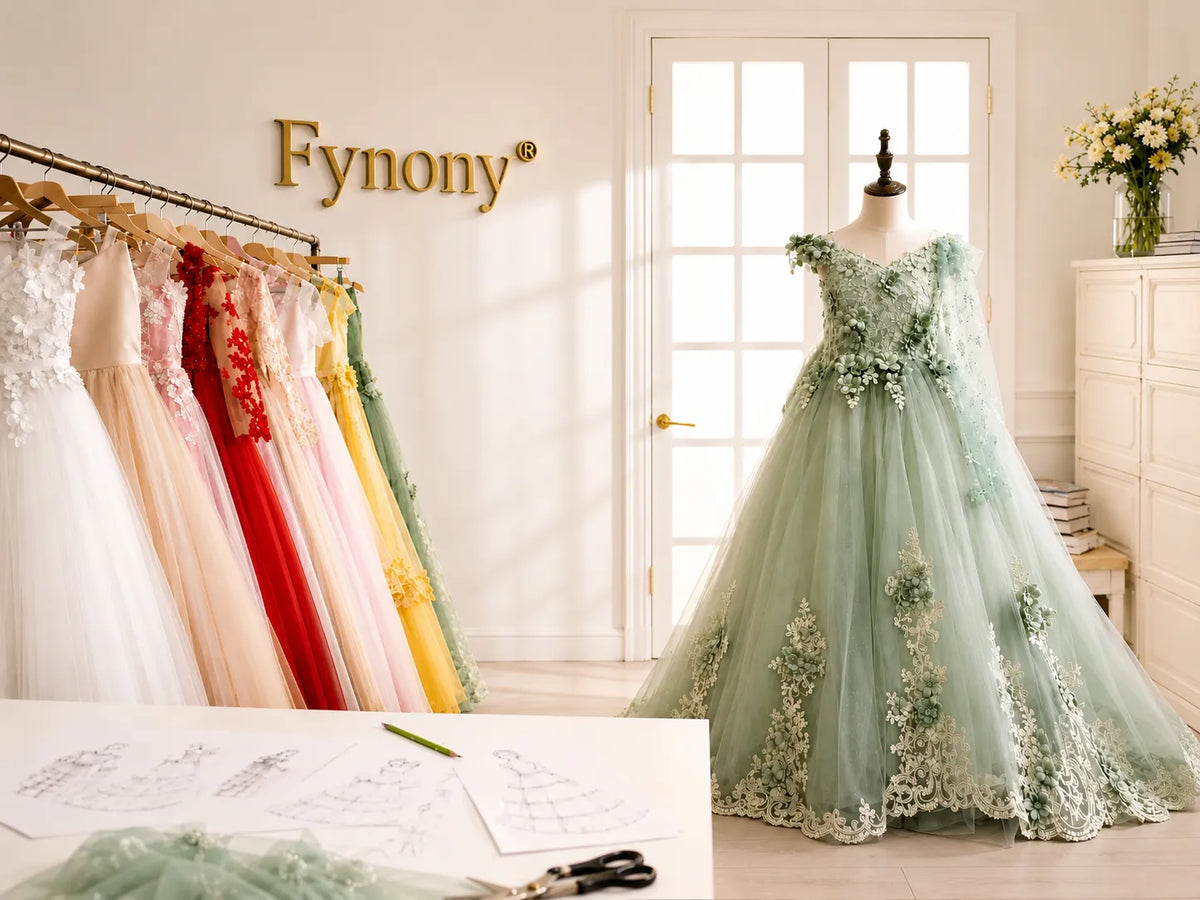

A dress that looks perfect online can become a problem after an hour in the heat.
That is why choosing girls summer dresses is less about finding the prettiest option and more about finding one that still works after walking, sitting, photos, dinner, and play. A summer dress may need to handle a hot outdoor ceremony, a windy waterfront, a long car ride, or several hours at a party. The best choice depends on the day she is actually going to have.
Start with the temperature, venue, activity level, and length of the event. Once those are clear, fabric, lining, sleeves, length, and silhouette become much easier to judge.
Quick Answer: What Makes a Good Summer Dress for Girls?
For most everyday summer occasions, a lightweight A-line or softly flared dress around knee length is a practical starting point. It gives enough room to move without adding unnecessary fabric and can often work for casual outings, family photos, lunches, and less formal celebrations.
Weddings and special events may justify longer hems, lace, satin, chiffon, or tulle. Even then, lining, overall weight, fit, and movement usually matter more than decorative detail.
A dress does not have to be the lightest or shortest option to work in summer. It simply has to make sense for the temperature, venue, and amount of time she will wear it.
Fabric, Lining and Heat: What Actually Matters

"Summer fabric" is not a very useful category on its own.
A chiffon dress can look light and fluid but still have a full lining and several skirt layers. Satin can work perfectly well for an indoor birthday dinner but feel less practical during an outdoor afternoon event. A knee-length tulle dress may contain more bulk than a longer chiffon style.
The finished garment matters more than the fabric name.
The CDC recommends loose, lightweight clothing for children in hot conditions and emphasizes keeping them cool and hydrated. For dress shopping, that means looking at the whole construction rather than judging comfort from the outer layer alone. CDC guidance on children and heat
Chiffon usually gives a softer, more fluid silhouette, while satin tends to look cleaner and more structured. Either can work in summer if the lining and overall construction suit the event.
With lace, the better question is not simply whether lace is "good for summer." Ask what actually touches her skin. Check the neckline, underarms, sleeve edges, waist seam, and lining. A lace pattern may look delicate in photos and still feel rough after several hours of movement.
If lace is already the direction you are considering for a ceremony, the lace flower girl dress guide goes deeper into lining, neckline comfort, fit, and wedding setting.
Tulle creates volume, which can be useful for flower girls and formal parties. One or two soft layers may move easily. Several stiff layers create a very different dress—and more fabric to manage while sitting, climbing stairs, or walking across grass.
Fiber content matters too. Textile guidance from the University of Georgia notes that fibers differ in absorbency, drying behavior, wrinkle resistance, and heat sensitivity. That is one reason simple rules such as "chiffon is always cool" are unreliable. University of Georgia Extension textile fiber guide
Don't Ignore the Lining
The lining rarely gets much attention in product photography, but it can matter as much as the outer fabric.
A dress may look airy and still feel much warmer once you account for a full lining, fitted bodice, underskirt, and multiple layers. With white, ivory, or very pale dresses, lining also affects opacity. A skirt that appears fully opaque indoors may look different in strong daylight.
When possible, check the outer fabric, lining, visible skirt layers, waist construction, closure, sleeves, and total length before deciding a dress is truly lightweight.
Choose for the Occasion, Not the Product Photo
Instead of asking which summer dress is "best," ask what she will actually do while wearing it.
The venue can change the answer quickly. A long dress that feels completely reasonable at an indoor reception may become frustrating on a lawn, beach, or narrow staircase.
Casual Summer Dresses Should Be Easy to Forget About

For everyday wear, one of the best signs of a good dress is that the child stops thinking about it.
A lunch, museum visit, shopping trip, family gathering, or Sunday outing may still call for something more polished than shorts and a T-shirt, but the dress should not need constant lifting, smoothing, tying, or adjusting.
Simple A-line dresses for girls work well here because the silhouette usually leaves more room through the skirt while still looking put together.
Look closely at details that seem charming in product photos. Very long sashes, stiff underskirts, oversized bows, or delicate appliqués may be fine for a short celebration but unnecessary for an ordinary summer day.
If she has to lift the skirt every time she gets into the car, it is probably more dress than she needs for a casual outing.
Summer Vacation Dresses Need to Survive the Trip, Too

A vacation dress has to survive more than the weather. It may be folded into a suitcase, worn on stairs, sit through dinner, walk across uneven streets, and face a windy waterfront before it ever appears in a family photo.
That makes packability and care part of the buying decision.
Flowy summer dresses can work especially well for resort dinners, garden visits, and photo sessions when the fabric moves easily without adding too much structure. One example is the Floral Chiffon Girls Party Dress with High-Low Ruffle Hem, which uses a flowing silhouette and asymmetrical hem for a dressier vacation moment without the bulk of a full formal gown.
It is still not beachwear. For active time on the sand or a full sightseeing day, a shorter and simpler style would usually be easier.
Care matters as well. The FTC requires covered garments to carry regular care instructions, so it is worth checking the label before assuming a dress will be easy to refresh during a trip. FTC guidance on clothing care labels
A dress that looks good only after careful steaming may be less useful on vacation than one that tolerates folding, movement, and repeat wear. Pale solid fabrics can also show sunscreen marks, food spills, and travel creasing more easily than many prints.
Floral Summer Dresses Sit Nicely Between Casual and Formal

Floral dresses are useful in summer because the print itself can do much of the visual work.
That often means the dress does not need sequins, heavy embroidery, or dramatic skirt volume to feel special. Floral summer dresses can move easily between vacation dinners, birthday lunches, garden parties, family photos, and relaxed weddings.
Print scale changes the effect.
Small- to medium-scale florals usually feel quieter and can be more forgiving of minor wrinkles or small marks. Larger, high-contrast flowers create more of a statement and may suit a specific event better than everyday wear.
For older girls, cleaner florals can also solve a common problem: wanting something that feels less juvenile without moving into adult eveningwear.
Choose Color for the Setting, Not Just the Season
Summer does not have one correct palette.
Blush, dusty rose, sage, mint, dusty blue, lavender, pale yellow, white, ivory, and floral prints can all work. The more useful question is whether the color fits the setting and whether the child will want to wear it again.
White and Ivory: Beautiful, but Less Forgiving

White and ivory photograph especially well for beach portraits, church celebrations, family photos, and formal daytime events.
One example is the Blossom Grace Lace Flower Girl Dress, which keeps the overall proportion relatively light with a knee-length lace-and-chiffon construction.
With pale dresses, check opacity in natural light whenever possible. Sunscreen can transfer onto necklines and straps, and pale fabrics tend to show food stains and small marks more readily than prints.
For wedding guests, white requires more caution. Do not choose it simply because it looks summery; the invitation, family expectations, and the child's role matter more than the season.
Softer Colors Work Well Outdoors
Blush and dusty rose suit birthdays and portraits without looking strongly themed. Sage and softer greens sit naturally against garden or vineyard backgrounds. Dusty blue and lavender can work across both weddings and less formal celebrations.
If you are coordinating a wedding rather than choosing an everyday dress, the flower girl dress color guide goes further into season, venue, age, and bridal-palette decisions.
Sleeves and Coverage: More Fabric Is Not Always More Restrictive

Summer dresses with sleeves are not necessarily too warm. Sleeve shape, fabric weight, and how closely the sleeve fits often matter more than coverage alone.
Sleeveless styles work well for warm indoor parties, vacation dinners, and some formal events.
Short sleeves may be preferable for church, heavily air-conditioned venues, or families who want more shoulder coverage. A loose flutter sleeve usually allows easier movement than a narrow fitted sleeve, so sleeve construction matters as much as sleeve length.
For outdoor events, more coverage can help, but ordinary sleeves are not the same as tested sun-protective clothing. The American Academy of Pediatrics recommends considering fabric coverage and verified UPF ratings when UV protection is a priority. American Academy of Pediatrics sun-safety guidance
Length and Silhouette Should Match the Day

Length affects more than appearance.
Knee-Length
For many girls, knee length is one of the easiest summer proportions. It works well for walking, sitting, stairs, and play while still looking polished enough for birthdays and family events.
Tea-Length
Tea length adds formality without putting the entire skirt on the floor. It is especially practical for daytime weddings and flower girls.
Floor-Length
Longer dresses work best when the event benefits from the extra formality.
Before choosing one, picture the actual venue: grass, sand, stairs, dancing, long walks, or a windy outdoor space.
A long hem is not automatically too hot. A lightly lined chiffon skirt may feel easier to wear than a shorter dress built with several stiff layers of tulle.
A-Line vs. Fit-and-Flare
A-line dresses usually prioritize movement and versatility. They work well for vacations, family photos, wedding guests, and mixed indoor-outdoor events.
Fit-and-flare styles create more definition at the waist and more volume through the skirt. They often feel more party-focused.
A useful rule is simple:
Choose A-line when movement and versatility matter most. Choose fit-and-flare when a more defined, celebratory shape is worth the extra structure.
Summer Party Dresses Don't Need to Be Mini Ball Gowns

At a birthday party, a dress may spend as much time under a table, in a car seat, or on a dance floor as it does in photographs.
That is why a manageable hem can be more useful than dramatic volume.
The Satin A-Line Flower Girl Dress with Bow Back is a useful example. Its knee-length A-line shape gives it enough polish for a birthday or indoor celebration without adding the bulk of a full formal gown.
It would make less sense for an all-day outdoor activity—and that distinction matters more than whether a dress is technically labeled "party."
Once you know the level of formality you need, browsing birthday party dresses for girls becomes more useful than starting with decoration alone.
Rewearability Is More Specific Than "Versatility"
"Versatile" appears in clothing descriptions all the time. A better question is:
Where would she genuinely wear this again?
A simple floral A-line might work for a vacation dinner, family photos, a birthday lunch, and a relaxed wedding. A heavily themed party dress may have fewer realistic second outings.
That does not make the one-event dress a bad purchase.
It simply means you should know whether you are paying for one memorable occasion or a dress with several likely uses.
Care matters too. A dress that technically suits five occasions but needs extensive steaming, specialist cleaning, or a very exact fit may not be especially versatile in real family life.
Summer Weddings Need Their Own Set of Rules

When shopping for a formal summer event, start with the dress code and venue before deciding how much length, structure, or embellishment the occasion actually calls for.
A wedding guest, flower girl, and junior bridesmaid may all attend the same event, but they do not need the same dress.
Start With the Invitation
"Summer" does not override the dress code.
Emily Post recommends using the invitation and time of the wedding as important clues to formality, while also considering the setting and type of ceremony. Emily Post wedding guest attire guidance
For a child, translate that into practical questions: how formal should the silhouette be, how much coverage is appropriate, how much time will she spend outside, and does she need to coordinate with the wedding party?
For Wedding Guests
A child attending as a guest usually does not need to look like part of the bridal party.
An elegant A-line, soft floral, or knee- to tea-length dress often works well for daytime weddings. More formal evening events may justify additional length or structure.
If the event clearly calls for a dressier look, special occasion dresses for girls provide a more focused starting point than casual summer styles.
For Flower Girls
A flower girl's dress has more jobs to do. It may need to coordinate with the bridal palette, look appropriate walking down the aisle, photograph well, and remain wearable through dinner and dancing.
If you are still deciding on the overall direction, the guide to choosing a flower girl dress covers role, styling, and ceremony considerations in more depth.
Once the level of formality is clear, comparing flower girl dresses by fabric, length, and silhouette becomes easier.
Outdoor weddings may call for a softer balance. For a garden, vineyard, or relaxed ceremony, the boho flower girl dress guide explains how venue, fabric, and movement affect the choice.
A fuller formal style can still make sense when the ceremony supports it. The Garden Bloom Flower Girl Dress, for example, uses dimensional floral detail and layered tulle for a stronger garden-wedding look. It is better suited to a formal ceremony and photos than several hours of active outdoor play.
For older girls in the wedding party, junior bridesmaid styles can offer cleaner silhouettes, softer structure, and less princess-like volume than traditional flower girl dresses.
Choosing by Age Is Really About Changing Priorities

Age matters less as a rigid style rule than as a clue to changing practical needs and preferences.
Younger Girls: Practical Details Come First
For preschool-age girls, check the parts adults often overlook.
Can she use the bathroom without wrestling with the skirt? Will the hem get under her shoes? Are there rough seams? Will long ribbons trail behind her? Can she get in and out of the car comfortably?
If you are shopping specifically for a younger child in a wedding, toddler flower girl dresses can narrow the product search, but those practical checks still come first.
School-Age Girls: Let Her Choose What She Sees
Around six to eight, many girls begin caring more about color, print, twirl, and decorative details.
Parents can handle the invisible filtering—fit, lining, length, closure, and practicality—then let the child choose between the options that already pass those tests.
That usually works better than choosing the "sensible" dress first and hoping she will like it afterward.
Tweens: Don't Make "Appropriate" Mean "Little Girl"
Around nine to twelve, the problem often changes.
A girl may reject oversized bows, princess skirts, or playful appliqués because they make her feel younger than she is. That does not mean she needs adult eveningwear.
Cleaner florals, softer A-lines, simpler necklines, and less exaggerated volume can bridge the gap.
The goal is not to make her look older. It is to choose details that no longer feel juvenile.
Fit Matters More Than the Age on the Label
Age-based sizing is convenient. It is not precise.
Two ten-year-olds can have very different chest, waist, height, and torso proportions. Before ordering, compare actual measurements with the product's specific size chart.
Measure over the undergarments she is likely to wear with the dress rather than over bulky clothing.
For formal dresses, pay particular attention to:
- chest
- waist
- dress length
- where the natural waist seam is likely to sit
Torso length can matter even when it is not listed separately. A defined-waist dress may technically fit the chest and still look wrong if the waist seam falls too high or too low.
Why Sizing Up Can Backfire
"Buy one size up so she can grow into it" sounds practical.
On a loose casual dress, the extra room may be harmless. On a fitted occasion dress, it can widen the neckline, enlarge the armholes, lower the waist, and change the balance of the skirt.
Growth room only helps when the dress still fits as designed.
Where Summer Dress Shopping Usually Goes Wrong
Choosing for the Photo, Not the Day
Parents sometimes shop for the twenty-minute photo session and forget about the next four hours.
A dress may need to survive a car ride, lunch, ceremony, photos, and dancing. Waist comfort and skirt volume matter far more at hour four than they do in the first picture.
Assuming Chiffon Automatically Means Cool
Chiffon can look light without the finished dress actually being light.
Check the lining, length, fiber content, and number of layers before making that assumption.
Sizing Up Without Checking Proportions
Extra room can change the neckline, armholes, waist placement, and overall balance.
More space is not automatically more comfort.
Choosing Too Much Skirt for the Venue
A full tulle skirt may work beautifully in a ballroom.
On grass, sand, narrow stairs, or a windy waterfront, that same volume becomes something the child has to manage.
Three Real-Life Summer Dress Scenarios
Scenario 1: A 7-Year-Old on a Beach Vacation

Imagine a hot afternoon, family photos near the water around 5 p.m., followed by dinner at a casual restaurant.
A lightweight floral or pastel A-line with a manageable hem makes more sense than a full tulle gown. Wind matters. Walking matters. Sunscreen marks and suitcase creasing may matter too.
If she is barefoot for the beach photos and changes into sandals for dinner, a hem that nearly reaches the ground can become annoying very quickly.
A flowing floral chiffon dress can work nicely for the photo-and-dinner part of the day.
For active beach play, it would not be the first choice.
Scenario 2: A 10-Year-Old at a Summer Wedding

Now imagine a 4 p.m. ceremony, outdoor photos, an indoor reception, and dancing afterward.
A lightweight A-line with enough polish for the ceremony is a sensible starting point.
For a ballroom reception, a longer chiffon skirt may be worth the extra formality. For a lawn ceremony followed by outdoor photos, tea length is often the easier call.
The venue makes the decision clearer than the season does.
Scenario 3: A 12-Year-Old at a Garden Party

At twelve, the biggest issue may be neither heat nor formality.
It may be that she does not want to look like a little girl.
A cleaner floral silhouette can work better than simply adding more sparkle or volume. The One-Shoulder Floral Maxi Dress illustrates that direction with lightweight floral chiffon and a more streamlined shape.
For a tween, the goal is not to copy adult eveningwear. It is to choose details that feel polished without looking juvenile.
Quick Comparison: Which Summer Dress Should You Choose?
Final Takeaway
The best girls summer dress is the one that still works after the photo is taken.
If she can walk, sit, eat, and move comfortably without constantly adjusting the dress, the practical choices were probably right. Start with the day she is actually going to have, then choose the fabric, length, and silhouette around it.